Korea President Lee Jae-myung has ordered the government to review strong administrative measures, including license revocation and a ban on public bidding for POSCO Engineering & Construction (POSCO E&C), following a series of fatal accidents at its construction sites. The directive came after a worker died on August 5 during a concrete work process at a high-rise apartment construction site in Pyeongtaek, Gyeonggi Province. POSCO E&C was the main contractor for the project, and President Lee expressed deep regret, emphasizing that “effective punitive measures such as license revocation must be applied in the event of serious industrial accidents.”

POSCO E&C, established in 1994, is a leading South Korean general contractor and a major affiliate of POSCO, the nation’s largest steelmaker. The company has carried out numerous domestic and international projects across various sectors including plant engineering, housing, civil infrastructure, and environmental energy. As a strategic construction arm of POSCO Group, POSCO E&C has played a crucial role in building the group’s steel production facilities and related infrastructure. POSCO, founded in 1968, is a globally recognized steel manufacturer and one of Korea’s most prominent industrial enterprises, expanding its business portfolio into energy, construction, and battery materials.

However, POSCO E&C has faced repeated criticism over its safety management practices. According to the Ministry of Employment and Labor, the company has been involved in more than nine serious accidents over the past three years. Many of these incidents have been attributed to inadequate oversight, safety violations, and failure to comply with labor regulations. The government is now seriously considering administrative actions, including license revocation and exclusion from future public construction projects, in line with President Lee’s directive. An official from the presidential office stated, “Even large corporations are not above the law; companies that neglect safety will face consequences.”

Some in the construction industry have expressed concern that such harsh measures could stifle the sector. A representative from a major construction firm commented, “Revoking a construction license is equivalent to a corporate death sentence. The government should allow a reasonable warning and correction period.” On the other hand, labor unions and civil society groups argue that leniency has only enabled repeat offenses. A spokesperson for a worker advocacy group said, “The government must send a strong message that the value of human life comes first, especially when companies repeatedly fail to prevent workplace deaths.”

The Ministry of Land, Infrastructure and Transport, along with the Ministry of Employment and Labor, is conducting a thorough investigation to determine the extent of negligence and is expected to announce potential disciplinary actions within August. As the issue unfolds, it has reignited national debate about construction site safety, corporate accountability, and the role of government enforcement.

President Lee’s firm stance has elevated the issue from an isolated incident to a broader policy discussion on systemic reform. The outcome could have far-reaching consequences, not only for POSCO E&C but for the entire South Korean construction industry’s approach to industrial safety and ethics.

What are your thoughts on the government’s strong stance against companies involved in repeated fatal accidents?
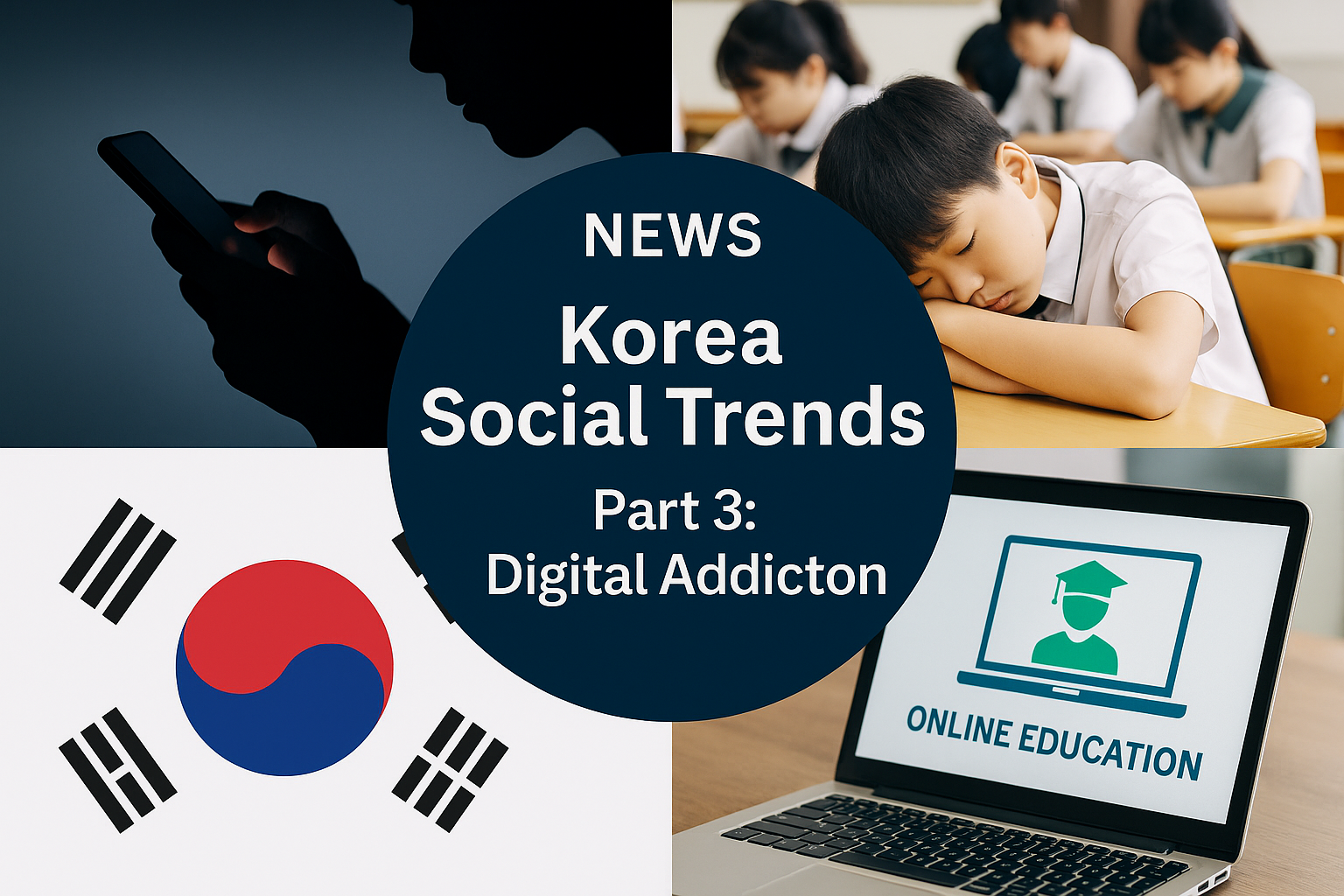
When people think of Korea, they often imagine high-speed internet, cutting-edge smartphones, and students studying late into the night. These images are not wrong—Korea has one of the fastest rates of technology adoption in the world, and education has always been a top priority for families. But when these two realities collide, challenges emerge. The…
!!! Warning: This article does not constitute investment advice. Any trading losses are the sole responsibility of the investor. !!! The Fall Below 110K Bitcoin has finally broken through the key half-channel support at $110,000, plunging as low as $107,000. This level had served as a psychological floor for weeks, and its loss has triggered…
The Korean National Assembly recently passed several high-profile and controversial bills, including the so-called Yellow Envelope Act (amendments to the Labor Union Act) and revisions to the Grain Management Act, triggering intense reactions from the government, business sector, agricultural groups, and civic society. The Yellow Envelope Act expands collective bargaining rights to include subcontracted and…
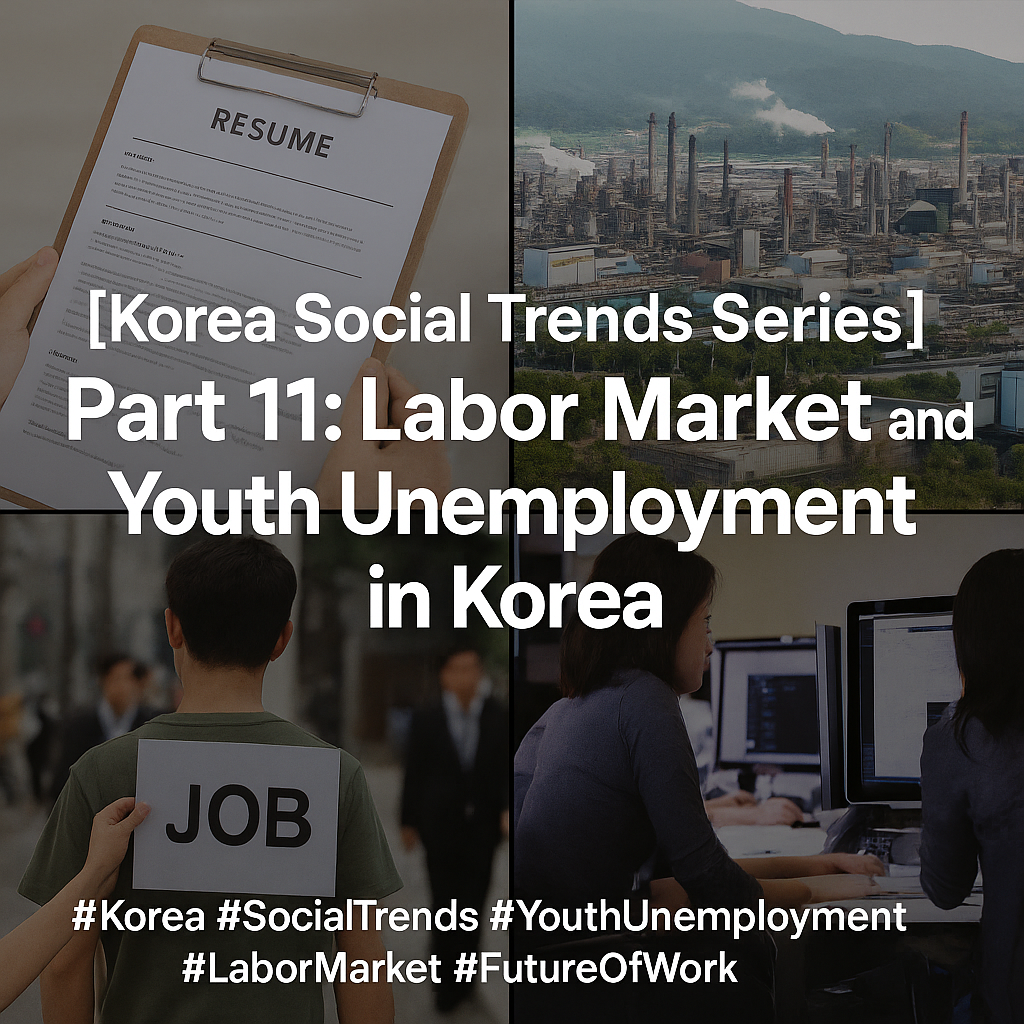
Korea’s economic success story is often celebrated for its rapid industrialization and global competitiveness, but beneath the surface lies a persistent challenge: the mismatch between the labor market and the aspirations of its younger generation. Youth unemployment, unstable job prospects, and structural inequalities within the workplace are pressing concerns that define the experience of today’s…
Chaos Story It started with something small.An Excel cell out of alignment. A missing image in a report.Minor things—nothing most people would even notice. But the team group chat always noticed.Or more accurately, he did. Every time she made the smallest error, he posted about it publicly.“Image missing on slide 2.”“Please double-check cell formatting.” It…
Korea’s rapid modernization has not only reshaped its economy and technology but also transformed the ways in which men and women define their roles in society. Gender roles and family structures that were once rigid and deeply rooted in Confucian traditions are undergoing significant change. For foreign readers, these shifts illustrate how Korea is negotiating…
To provide the best experiences, we use technologies like cookies to store and/or access device information. Consenting to these technologies will allow us to process data such as browsing behavior or unique IDs on this site. Not consenting or withdrawing consent, may adversely affect certain features and functions.
Functional
Always active
The technical storage or access is strictly necessary for the legitimate purpose of enabling the use of a specific service explicitly requested by the subscriber or user, or for the sole purpose of carrying out the transmission of a communication over an electronic communications network.
Preferences
The technical storage or access is necessary for the legitimate purpose of storing preferences that are not requested by the subscriber or user.
Statistics
The technical storage or access that is used exclusively for statistical purposes.The technical storage or access that is used exclusively for anonymous statistical purposes. Without a subpoena, voluntary compliance on the part of your Internet Service Provider, or additional records from a third party, information stored or retrieved for this purpose alone cannot usually be used to identify you.
Marketing
The technical storage or access is required to create user profiles to send advertising, or to track the user on a website or across several websites for similar marketing purposes.



![[Korea Chaos Story] “I Just Wanted to Work in Peace”… When Group Chats Turn Emotional](https://knewsdaily.com/wp-content/uploads/2025/07/크기변환320250722-Chaos-KNet-1.png)