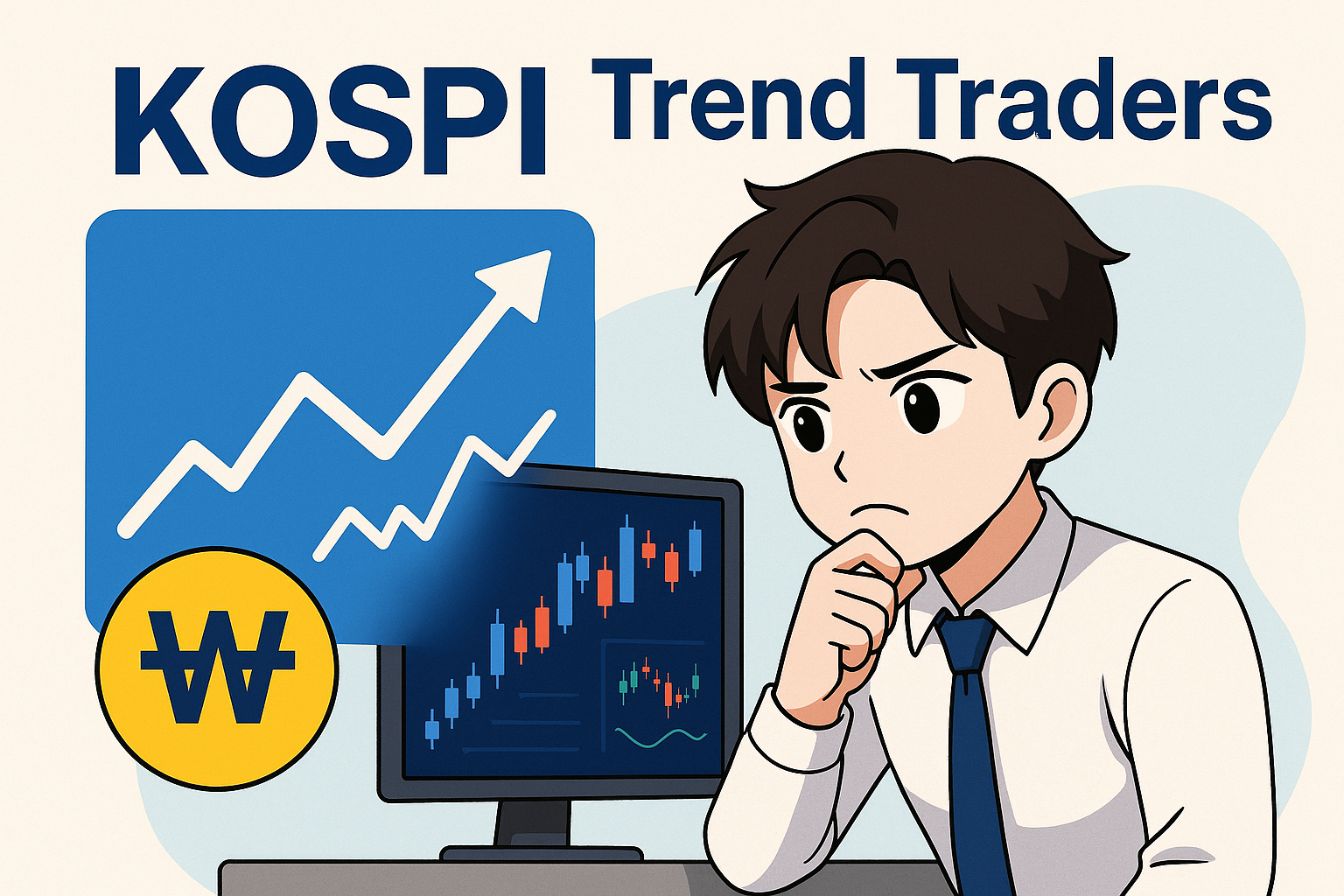
South Korea’s retail investors are showing a clear trend of concentrating on the KOSPI market again.
According to the Korea Securities Depository, in the first half of 2024, individual investors’ net purchases of KOSPI stocks totaled approximately 35 trillion KRW, marking a year-on-year increase of over 20%.

Experts note that while last year many retail traders favored volatile KOSDAQ stocks,higher interest rates and economic uncertainty have shifted retail money back to large-cap, stable KOSPI stocks.Key blue-chip picks include Samsung Electronics, SK Hynix, and LG Energy Solution — all consistently ranking high on individual investors’ buy lists.
1. From KOSDAQ to KOSPI
Data from the Korea Exchange shows that in the first half of 2024,KOSDAQ trading volume dropped by about 15% year-on-year, while KOSPI’s trading volume rose by more than 10%.

This shift reflects a growing preference for larger, more liquid companies with transparent earnings reports and solid dividend policies — providing a psychological safety net for retail investors during uncertain times.
2. Short-Term Trading Mindset Still Strong
Despite the move to large caps, the short-term trend-trading mindset remains unchanged. HTS (Home Trading System) data shows that individual investors still account for over 70% of daily trading volume, with day trading and swing trading steadily increasing.

Rather than buying low and holding long term, many Korean retail investors focus on “when the price will rise again” and aim for quick gains.
3. Market Outlook
Analysts warn that overreliance on short-term speculation can reduce long-term returns. With ongoing global rate fluctuations and exchange rate risks, the concentration on a few KOSPI blue-chip stocks could face adjustments ahead.
Many Koreans say that “people don’t buy low — they buy high.” Of course, this is not unique to Korea, but the idea of watching the trend and trying to time upward movements is especially strong among Korean retail investors.

I personally prefer buying undervalued stocks, but I also participate in trend trading when the market calls for it. Still, every investor should think seriously about whether they can control their risk exposure.
Bitcoin has smashed through yet another record, climbing to over $116,000 — an impressive $4,000 surge in just 24 hours. According to major crypto exchanges on July 11th, the market…
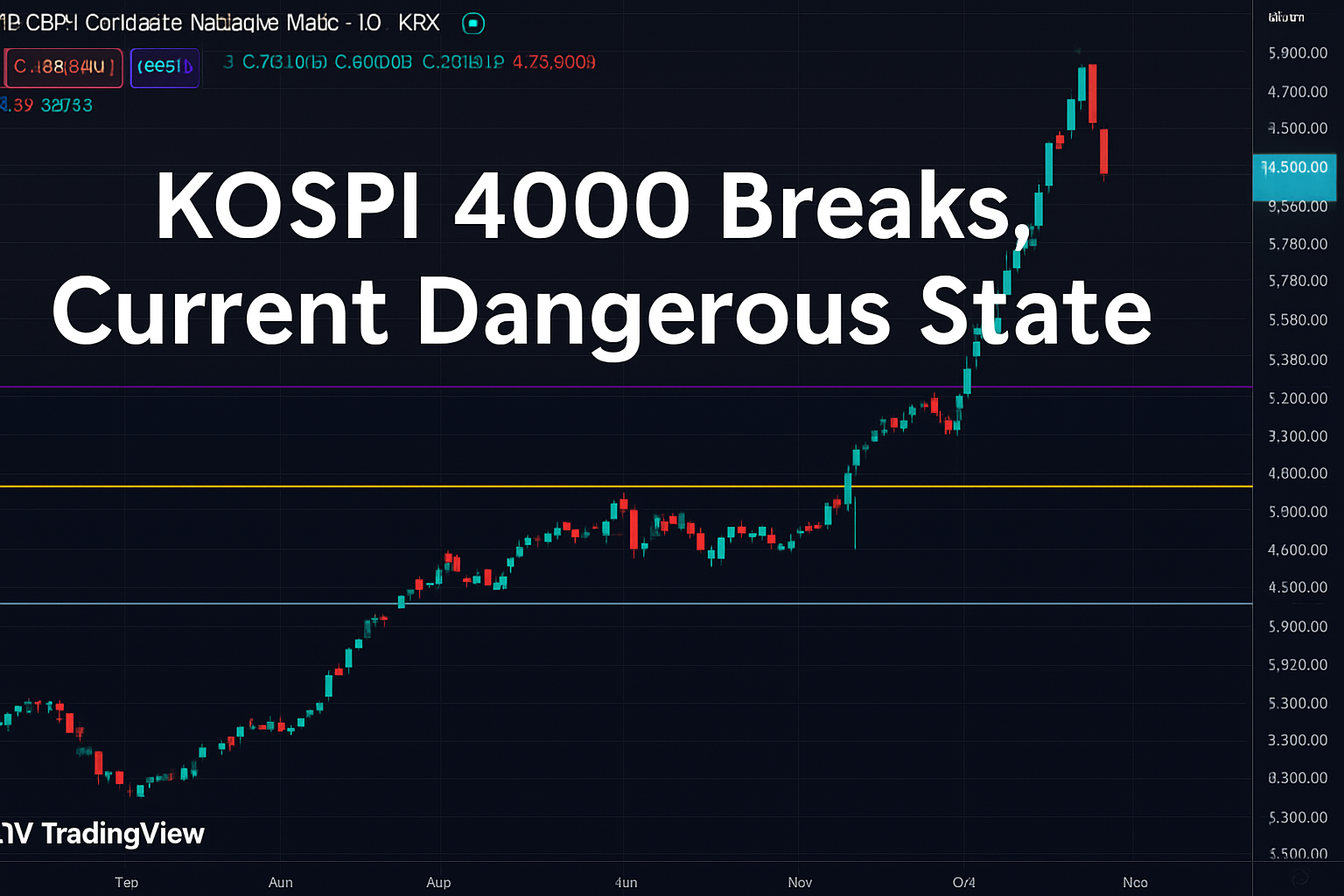
!!! Warning: This article does not constitute investment advice. Any trading losses are the responsibility of the investor. !!! Market Overview — A Sharp Turn After Presidential Optimism Following President…
Korea’s economic success story is often celebrated for its rapid industrialization and global competitiveness, but beneath the surface lies a persistent challenge: the mismatch between the labor market and the…
Hello! This is reporter Kim. There is a lot of news about e-cigarette regulations in Vietnam these days. I heard that e-cigarettes will be banned in Vietnam starting in 2025….
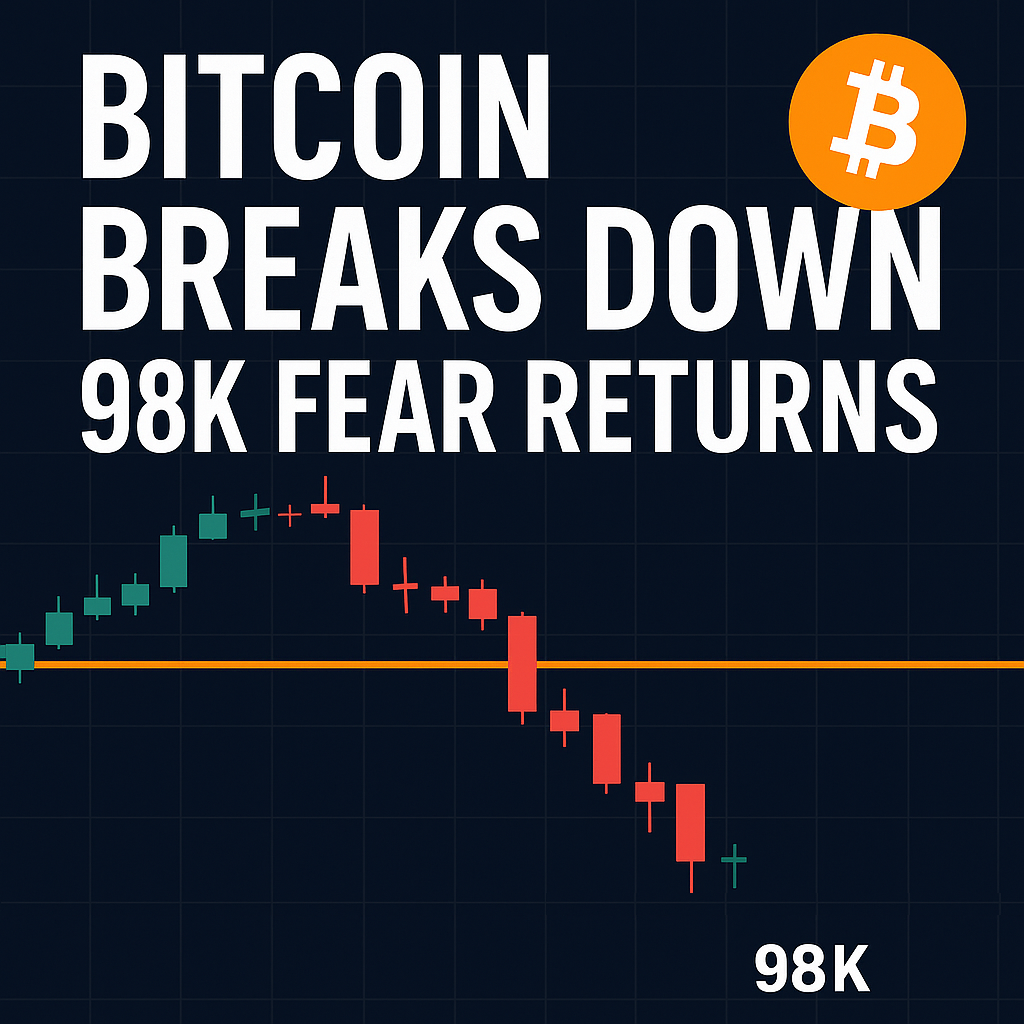
!!! Warning: This article does not constitute investment advice. Any trading losses are the responsibility of the investor. !!! Introduction — Bitcoin’s Half-Line Support Breaks Again Bitcoin has once again…
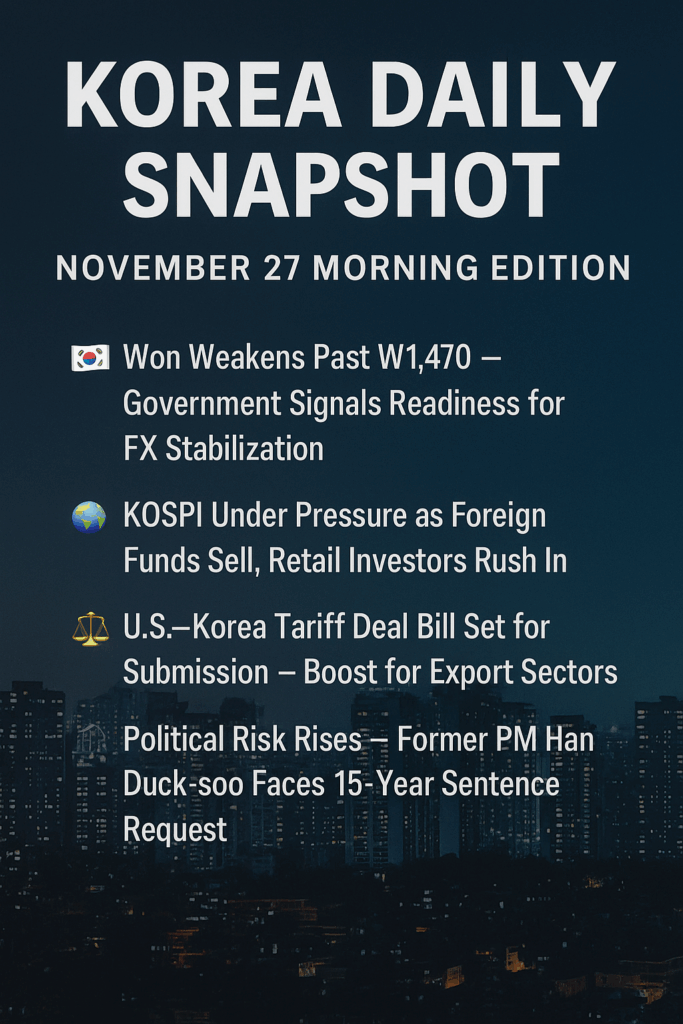
** Rising Market Volatility, Policy Uncertainty, and Currency Pressure Define the Day ** Image1. U.S. dollar / South Korean chart (Trading View) Won Weakens Past ₩1,470 — Government Signals Readiness…
To provide the best experiences, we use technologies like cookies to store and/or access device information. Consenting to these technologies will allow us to process data such as browsing behavior or unique IDs on this site. Not consenting or withdrawing consent, may adversely affect certain features and functions.
Functional
Always active
The technical storage or access is strictly necessary for the legitimate purpose of enabling the use of a specific service explicitly requested by the subscriber or user, or for the sole purpose of carrying out the transmission of a communication over an electronic communications network.
Preferences
The technical storage or access is necessary for the legitimate purpose of storing preferences that are not requested by the subscriber or user.
Statistics
The technical storage or access that is used exclusively for statistical purposes.The technical storage or access that is used exclusively for anonymous statistical purposes. Without a subpoena, voluntary compliance on the part of your Internet Service Provider, or additional records from a third party, information stored or retrieved for this purpose alone cannot usually be used to identify you.
Marketing
The technical storage or access is required to create user profiles to send advertising, or to track the user on a website or across several websites for similar marketing purposes.