Korea Movie Overview | What Is The Great Flood About? (Spoilers included below)
* Spoilers are separated at the end, so feel free to read the intro without any worry.
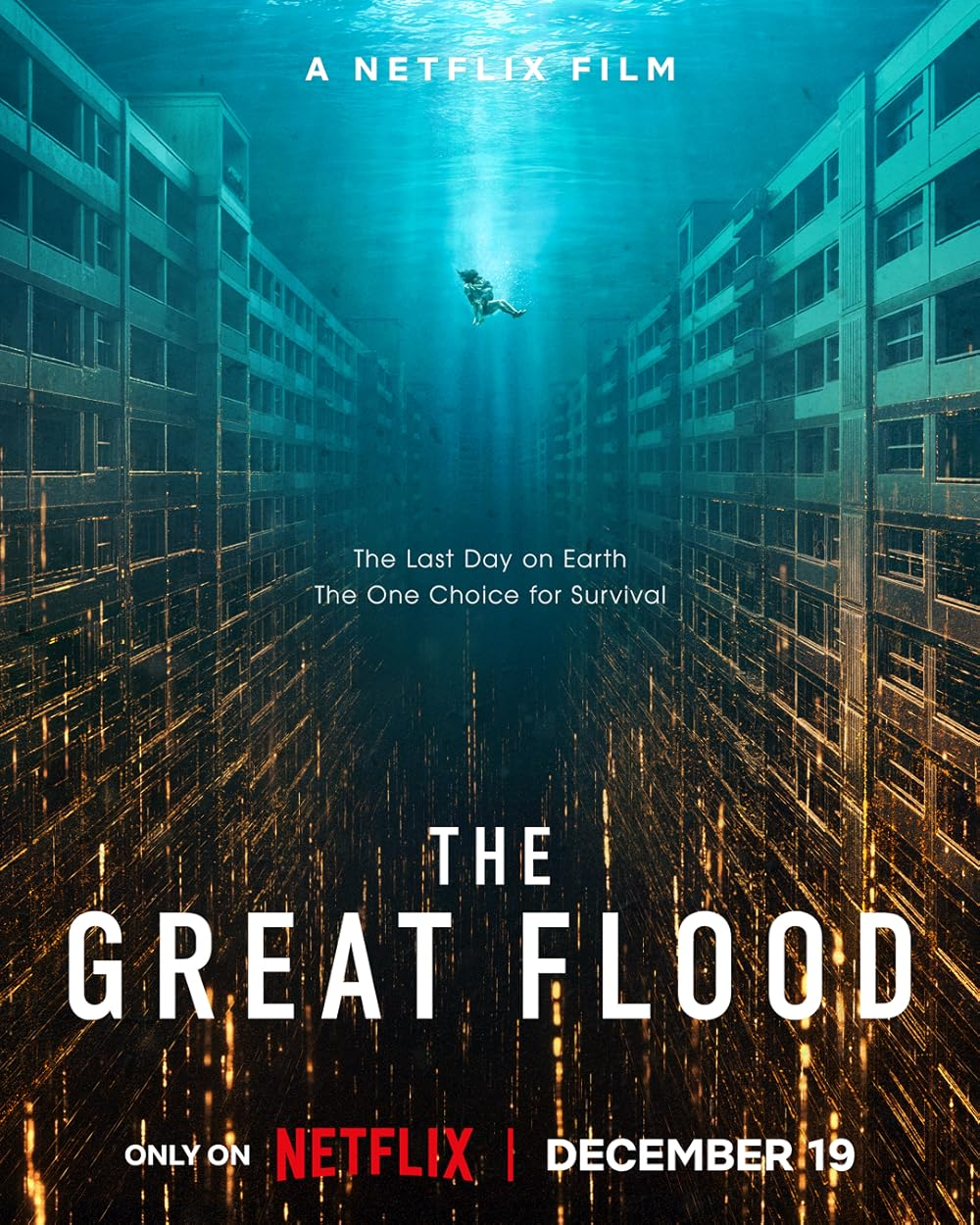
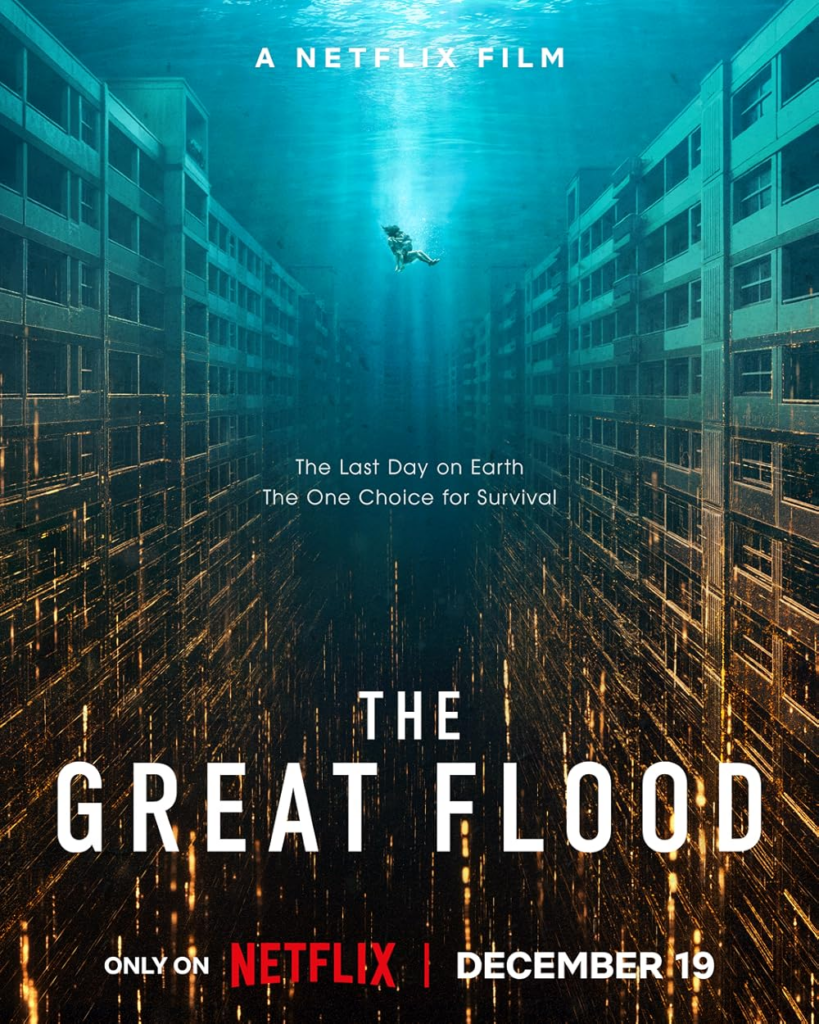
The Great Flood is a Korean SF disaster film set in the near future, depicting a world destabilized by an unprecedented, large-scale flood. Rather than focusing on the scientific cause of the catastrophe, the film centers on how individuals and systems respond once collapse has already begun.
The narrative places characters inside a constantly shifting environment where infrastructure fails, familiar spaces disappear, and survival becomes a moment-to-moment decision. The flood functions not as a single dramatic event, but as a persistent condition that reshapes movement, communication, and human relationships. In this sense, the film is less about preventing disaster and more about enduring within it.
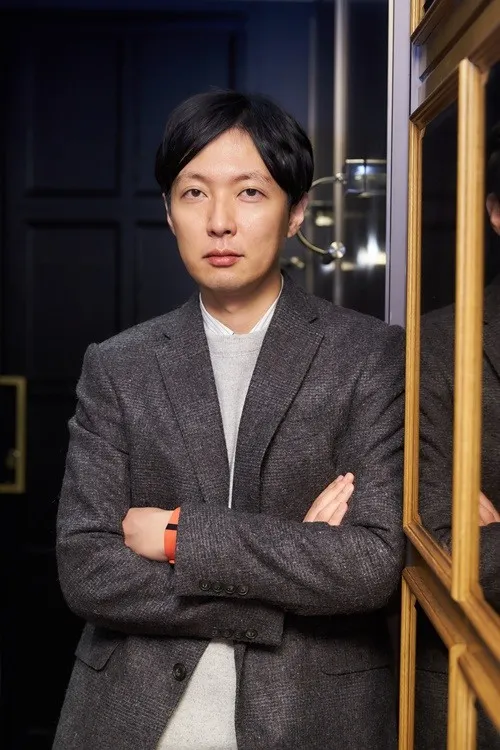




Director
Kim Byung-woo
Lead Actress
Kim Da-mi
Lead Actor
Park Hae-soo
Supporting Actor
Kwon Eun-seong
Supporting Actor
Kang Bin
Narrative Structure | A Process-Driven Disaster Film
Unlike traditional disaster movies that follow a clear arc of crisis and resolution, The Great Flood adopts a process-oriented structure. The story unfolds after the disaster is already in progress, and the audience experiences the situation alongside the characters, without the comfort of clear answers or a defined end goal.
Scenes are connected by escalation rather than resolution, emphasizing continuity of danger over narrative closure. This approach prioritizes immersion and immediacy, placing viewers inside a prolonged state of uncertainty rather than guiding them toward a single climactic payoff.
Visual Direction & Atmosphere | Water as a Dominant Spatial Force
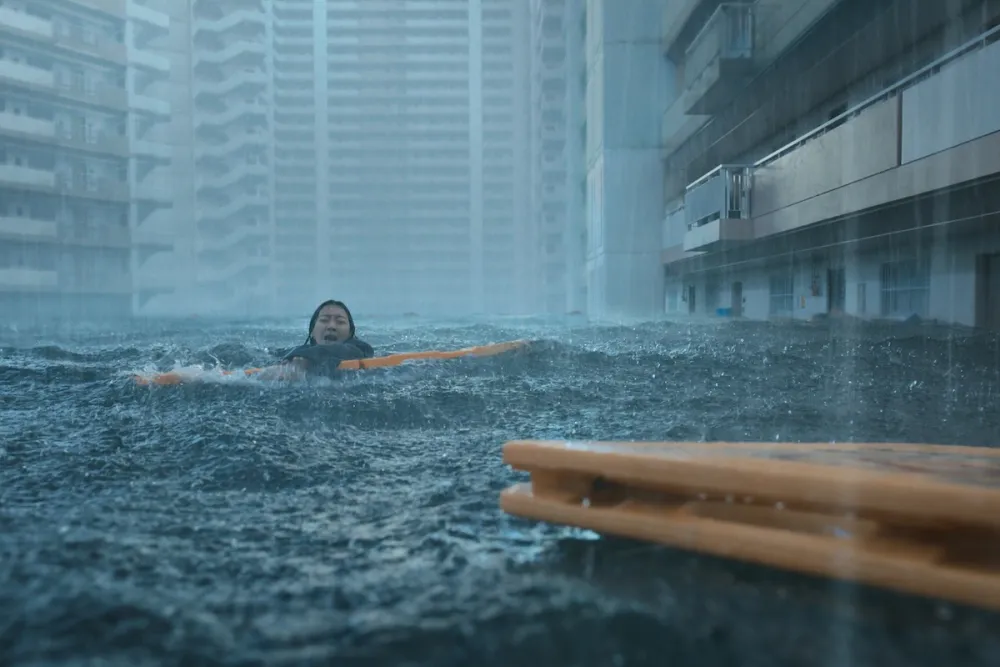
Visually, the film is dominated by water-filled and submerged spaces. Flooded interiors, rising water levels, and constrained escape routes recur throughout the runtime, creating a strong sense of physical confinement. The camera often stays close to the characters, emphasizing limited visibility, restricted movement, and the constant threat of drowning.
Sound design reinforces this atmosphere, with muffled audio, rushing water, and environmental noise replacing traditional musical cues. The result is a film that communicates danger less through spectacle and more through sustained sensory pressure.
Character Perspective | Survival Without Heroes
The characters in The Great Flood are not portrayed as conventional heroes. Instead, they are reactive figures navigating circumstances beyond their control. Their decisions are shaped by urgency, fear, and proximity rather than long-term strategy or moral clarity.
This perspective reinforces the film’s grounded tone. Survival is depicted as fragmented and exhausting, with no single character positioned as a savior. The disaster remains larger than any individual response.
Critics & Media Reception
Due to its Netflix-exclusive release, The Great Flood does not have a unified theatrical review aggregate. However, early media and critical responses show a mixed but attentive reception.
- Korean media reactions:
- Praised for its ambitious scale and immersive disaster depiction
- Noted for its commitment to atmosphere and tension
- Criticized by some for narrative fatigue and limited emotional release
- International platform response:
- Strong initial viewership interest driven by K-content visibility
- Clear division between viewers who appreciated the intensity and those who found it overwhelming
Average Media Perception Score
⭐ 3.0 – 3.5 / 5
.
.
.
(Below this point, core spoilers of the story and the author’s personal opinions will be disclosed)
.
.
.
Editor’s Opinion | A High-Profile Experiment That Divides Viewers
From this point forward, this is the editor’s personal perspective.
While watching The Great Flood, the most prominent impression was the accumulated psychological stress caused by repeated near-drowning sequences. Rather than building suspense, the constant immersion in water-based danger created a sense of emotional fatigue. The tension rarely subsides, which made the viewing experience feel heavy rather than gripping.
Additionally, the repeated use of warp-style spatial transitions, increasingly common in modern games and genre content, contributed to a sense of familiarity rather than novelty. Although the film’s incorporation of AI and futuristic systems is undeniably ambitious and experimental, these elements felt more taxing than stimulating during the viewing experience.
It was easy to anticipate from the announcement stage that this film would be polarizing, and that expectation largely holds true. As a K-content release, The Great Flood has all the ingredients to reach Netflix’s top viewership rankings. Still, from a personal standpoint, it remains a notably ambitious but somewhat exhausting film, leaving a sense of missed balance between innovation and narrative comfort.
i give it a full rating of 2.0 out of 5.0 (★★☆☆☆)
— Peter Kim, Korea-based journalist
Join the Discussion Share your take with the community →