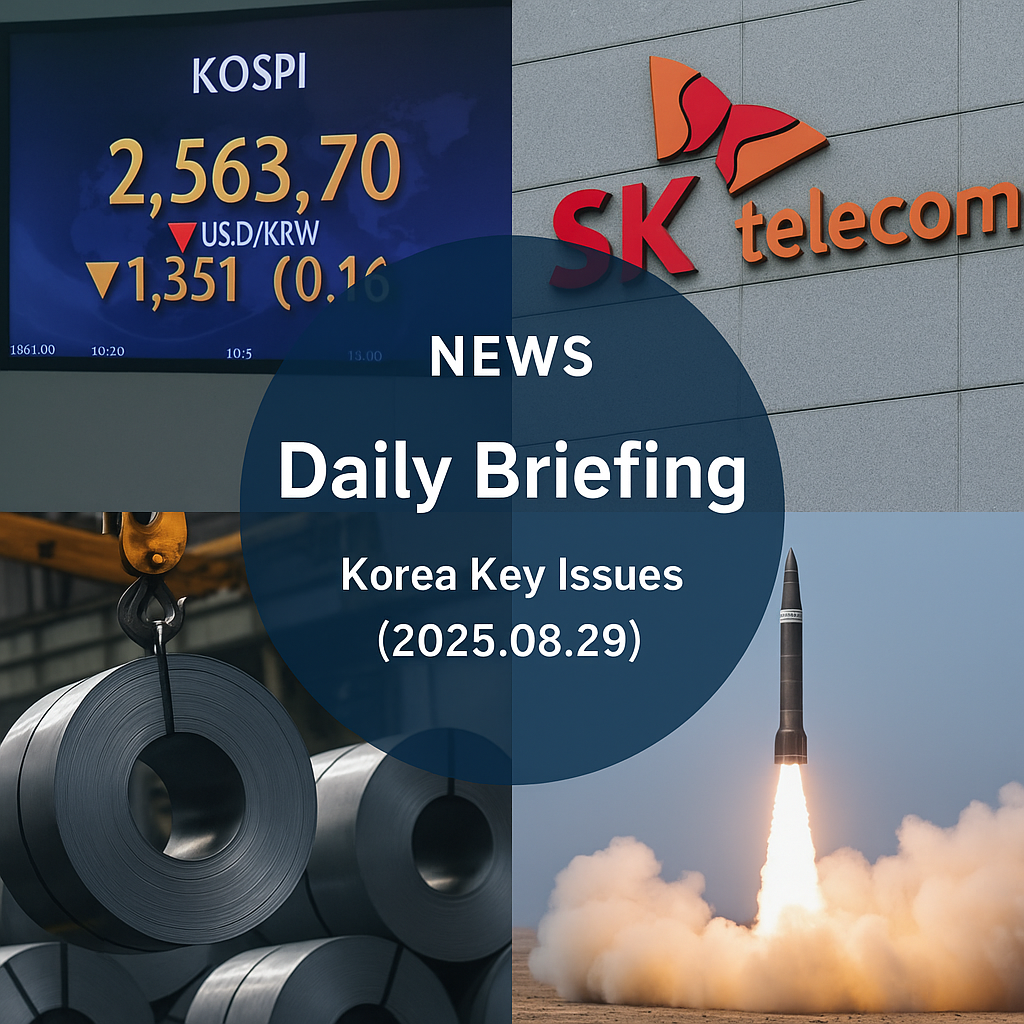
1. Bank of Korea Keeps Base Rate at 2.50%, Balancing Debt Risks and U.S. Economic Headwinds
The Bank of Korea (BOK) decided to keep its benchmark interest rate steady at 2.50% during its Monetary Policy Committee meeting on August 28, with six votes in favor and one dissenting opinion for a cut. The central bank’s stance reflects a cautious balance between containing mounting household debt and addressing risks from a slowing global economy, particularly trade pressures from the United States. Officials acknowledged that housing prices remain overvalued and consumer credit continues to rise, signaling systemic vulnerabilities if rates were lowered prematurely. However, with U.S. tariffs and trade barriers placing strain on Korean exports, the BOK also highlighted external risks that could dampen economic growth. The growth forecast for 2025 was adjusted slightly upward to 0.9%, reflecting moderate resilience in consumption and exports. Analysts suggest the BOK is likely to hold its rate policy at least until the first half of next year, while leaving the door open for easing in late 2025 if inflation remains subdued and growth momentum weakens further. The rate hold decision is seen as part of a broader strategy to stabilize the domestic financial system while cautiously navigating global uncertainties.
2. SK Telecom Fined ₩1.34 Trillion Over Data Breach Impacting 27 Million Users
In one of Korea’s largest corporate data security scandals, SK Telecom was fined 1.34 trillion won (approximately $97 million) by the Personal Information Protection Commission for a massive data leak that exposed personal information of more than 27 million users. The breach, caused by sophisticated cyberattacks earlier this year, was exacerbated by delayed detection and inadequate internal safeguards within SK Telecom’s IT infrastructure. Regulators criticized the company for failing to maintain robust defenses against increasingly frequent and sophisticated hacking attempts, pointing to systemic gaps in its security protocols. In response, SK Telecom announced a five-year, 7 trillion won investment plan dedicated to upgrading cybersecurity infrastructure, hiring specialized personnel, and adopting advanced encryption technologies. The case underscores growing public concern over corporate responsibility in handling sensitive data, with consumer trust in large telecoms and tech companies under renewed scrutiny. Experts note that the record fine reflects the government’s determination to enforce stricter accountability in the digital economy, while warning that companies that fail to prioritize data security face not only financial penalties but lasting reputational damage.
3. China Extends Anti-Dumping Duties on Phenol Imports from Korea and Four Other Economies
China’s Ministry of Commerce announced a five-year extension of anti-dumping duties on phenol imports from Korea, the U.S., the EU, Japan, and Thailand. Phenol, a key chemical used in plastics, pharmaceuticals, and adhesives, plays a central role in industrial supply chains, meaning the duties will likely raise input costs across sectors. For Korea, which exports significant volumes of phenol to China, the extension represents a blow to chemical and manufacturing industries already under pressure from rising raw material prices and global oversupply. Industry insiders warn that Korean producers may face reduced competitiveness, while downstream industries could struggle with higher costs and supply chain disruptions. The move highlights growing trade protectionism as major economies seek to safeguard domestic industries, a trend that has accelerated amid global economic slowdowns. Analysts suggest Korean companies will need to diversify export markets and accelerate innovation in higher-value chemical derivatives to offset losses from Chinese restrictions. The decision underscores the fragility of Korea’s trade dependence on China and the urgency of broadening its industrial and export strategies in a more protectionist global environment.
4. North Korea Expands Nuclear Capabilities with Russian Assistance
Reports from U.S. and allied intelligence agencies confirm that North Korea, with Russia’s technical and logistical support, has made significant strides in expanding its nuclear arsenal. Recent tests indicate progress in developing multiple independently targetable reentry vehicles (MIRVs), hypersonic glide vehicles, long-range ballistic missiles, and reconnaissance satellites. This development raises alarm across the international community, as it suggests Pyongyang is rapidly improving both the sophistication and survivability of its nuclear forces. Russian support is believed to include advanced engineering expertise and critical materials, provided in exchange for North Korean military supplies supporting Moscow’s ongoing conflicts. For Seoul, these advancements exacerbate existing security dilemmas, undermining deterrence stability and complicating defense planning. Analysts warn that the convergence of Russian and North Korean strategic interests could fundamentally alter the security landscape in Northeast Asia, increasing pressure on Korea and its allies to bolster missile defense, intelligence-sharing, and diplomatic coordination. The situation has prompted renewed calls for stronger trilateral security ties among Korea, the United States, and Japan, though questions remain about the effectiveness of existing sanctions in slowing Pyongyang’s nuclear ambitions.
5. Korea and U.S. Agree to Begin Talks on Nuclear Fuel Reprocessing
Foreign Minister Cho Hyun announced that Korea and the United States have agreed to initiate discussions on nuclear fuel reprocessing, a sensitive issue long constrained by the terms of the U.S.-Korea nuclear cooperation agreement. Korea, operating 26 nuclear reactors nationwide, faces growing pressure to manage spent fuel as storage capacity approaches its limits. Seoul is emphasizing both environmental and industrial needs in advocating for expanded reprocessing capabilities, while Washington has cautiously agreed to exploratory talks within the bounds of current non-proliferation commitments. Proponents argue that advancing reprocessing technology could enhance Korea’s energy security and reduce environmental risks, while critics caution that it risks undermining global non-proliferation norms and raising regional security concerns. The announcement follows the recent Korea-U.S. summit, where energy cooperation was a key agenda item, signaling Seoul’s intent to align its nuclear strategy more closely with its long-term energy independence goals. The outcome of these talks could reshape Korea’s nuclear policy and carry broader implications for its role in global non-proliferation frameworks.
Editor’s Note
Today’s issues collectively highlight Korea’s balancing act across economic, technological, and security domains. The Bank of Korea’s decision to hold rates underscores the delicate task of containing domestic debt while navigating global trade turbulence. The record fine against SK Telecom reveals the urgency of corporate responsibility in data security, an area where public trust remains fragile. China’s anti-dumping duties illustrate the vulnerability of Korea’s export model, pushing for diversification and innovation in key industries. North Korea’s deepening nuclear cooperation with Russia heightens regional instability, demanding careful diplomatic and defense strategies. Meanwhile, Seoul’s engagement with Washington on nuclear reprocessing underscores the complexity of aligning energy security with global non-proliferation commitments. Taken together, today’s developments suggest Korea faces intertwined challenges that require both immediate policy discipline and long-term strategic vision. How do you think Korea should navigate these overlapping pressures to ensure resilience in the years ahead?
1. Korea-U.S. Summit Outlines Blueprint for a ‘U.S. Shipbuilding Renaissance’During his first official visit to the United States, President Lee Jae-myung met with President Donald Trump and announced a $5 billion investment in Hanwha’s Philadelphia shipyard, aiming to expand annual production from fewer than two vessels to as many as 20. This move is widely…
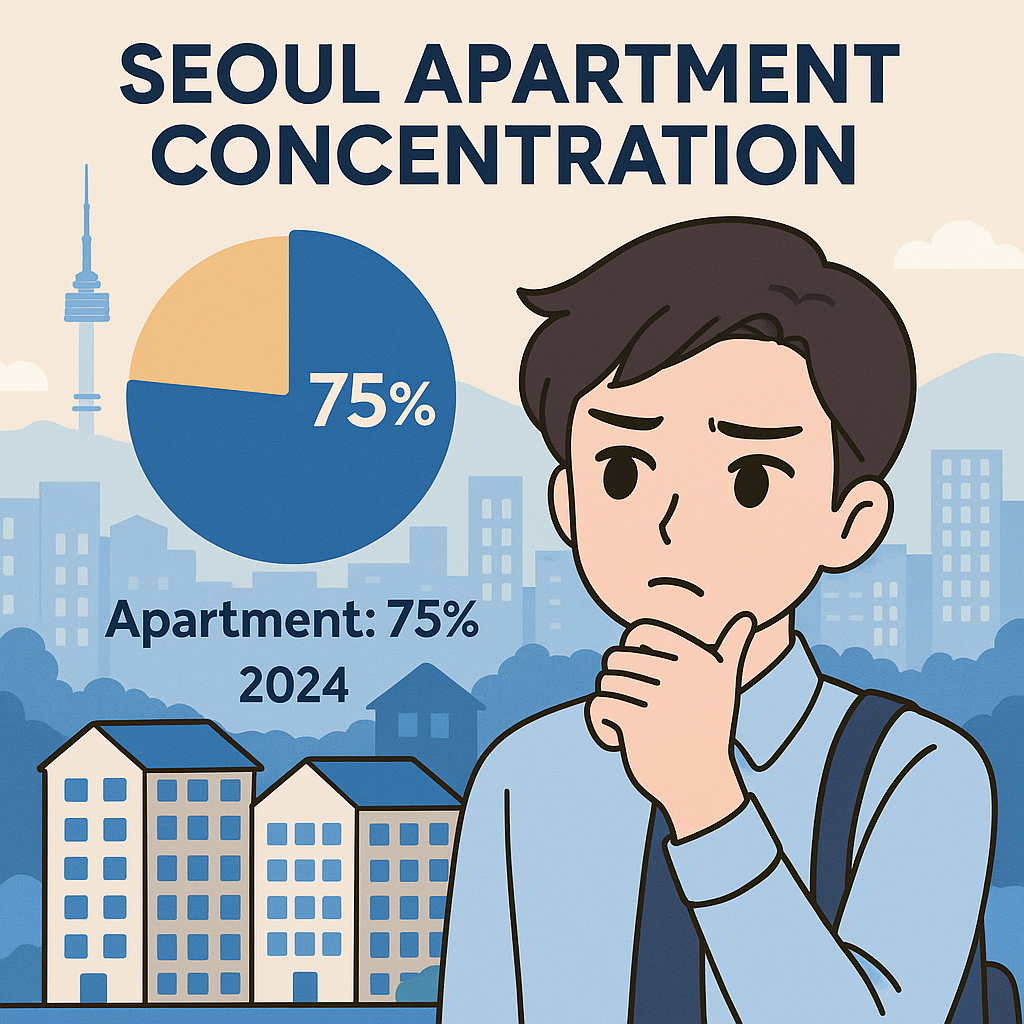
Seoul’s real estate market remains heavily focused on apartment transactions. According to the Ministry of Land, Infrastructure and Transport and the Korea Real Estate Board, as of 2024, over 80% of total housing sales in Seoul are apartments. This figure clearly outpaces transactions for villas (multi-family/row houses) and single-family homes.There are three main reasons for…
OriginGreetings. I am Bitcoin, the first of my kind — the foundation upon which every other cryptocurrency stands.I was born in 2009, from the mind of a mysterious creator known only as Satoshi Nakamoto. No one knows whether Satoshi was a man, a woman, or a group — and that’s precisely how I was meant…
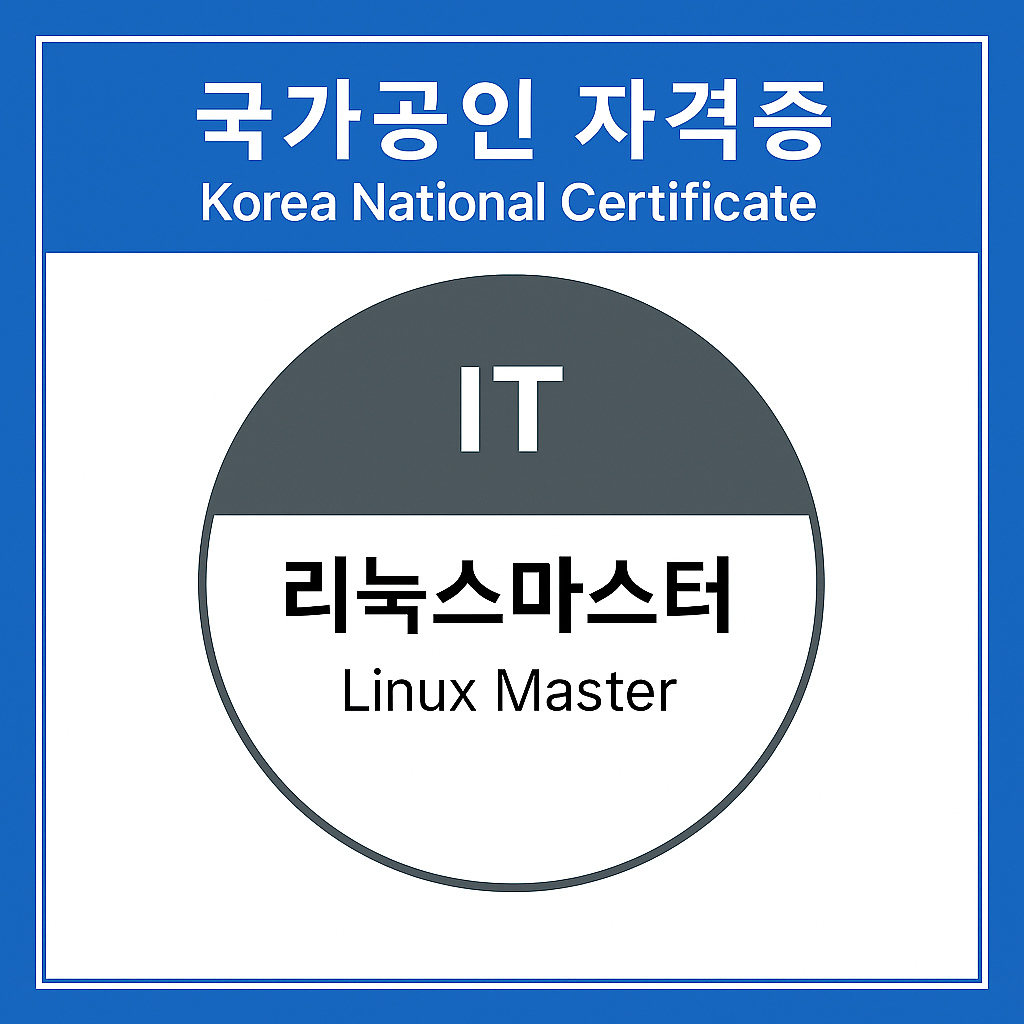
Summary: One-sentence ComparisonThe Linux Master is a national certification managed by the Korea Information and Communication Promotion Association (KIPA), composed of two levels (Level 1 and Level 2), with a written and practical test format, focusing on the ability to manage Linux systems and networks; it is held three times a year and is highly…
!! Warning: This content is not investment advice. Losses are your responsibility. !! Testing the Half-Line Bitcoin recently failed to break above resistance near 116,000 USD, forming 12 consecutive bearish 1-hour candles—a signal of sellers’ control in the short term. Yet, despite this pressure, Bitcoin found support around 111,000 USD, offering a glimmer of hope…
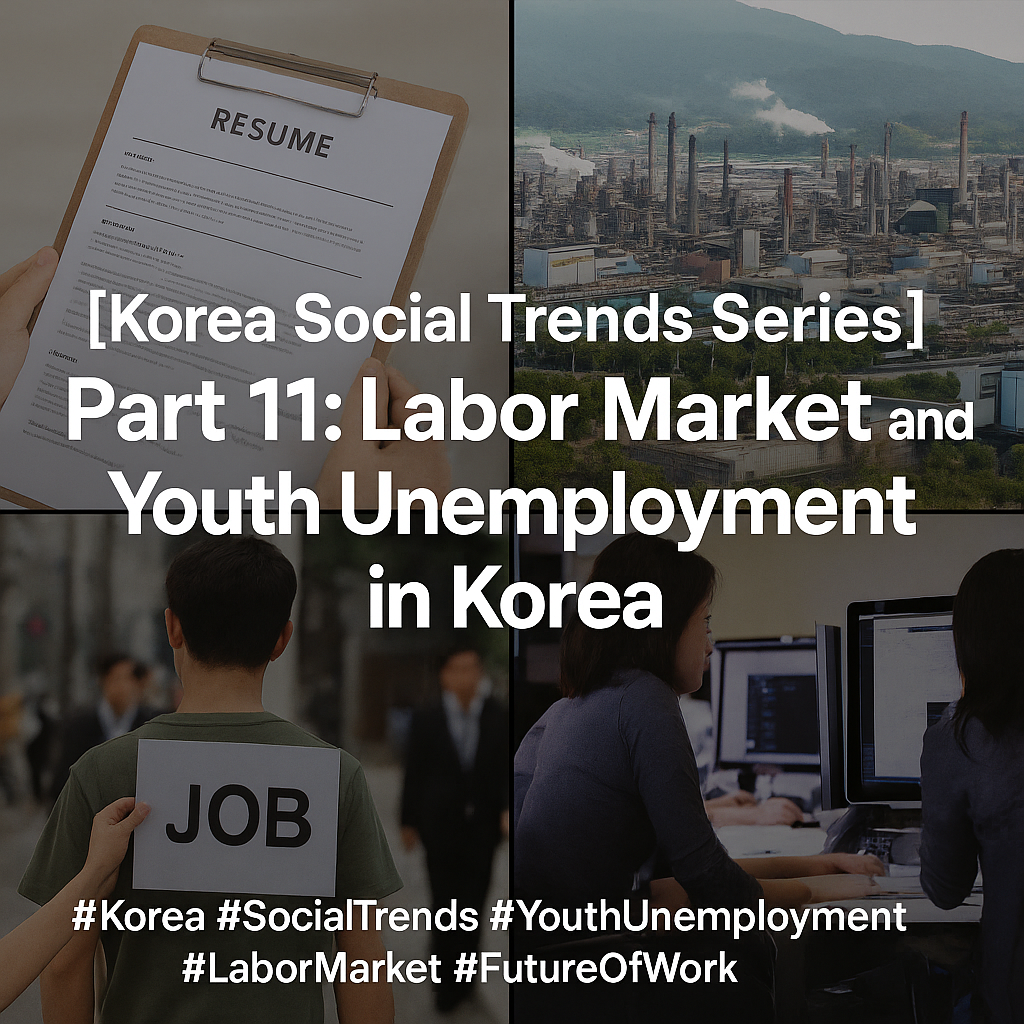
Korea’s economic success story is often celebrated for its rapid industrialization and global competitiveness, but beneath the surface lies a persistent challenge: the mismatch between the labor market and the aspirations of its younger generation. Youth unemployment, unstable job prospects, and structural inequalities within the workplace are pressing concerns that define the experience of today’s…
To provide the best experiences, we use technologies like cookies to store and/or access device information. Consenting to these technologies will allow us to process data such as browsing behavior or unique IDs on this site. Not consenting or withdrawing consent, may adversely affect certain features and functions.
Functional
Always active
The technical storage or access is strictly necessary for the legitimate purpose of enabling the use of a specific service explicitly requested by the subscriber or user, or for the sole purpose of carrying out the transmission of a communication over an electronic communications network.
Preferences
The technical storage or access is necessary for the legitimate purpose of storing preferences that are not requested by the subscriber or user.
Statistics
The technical storage or access that is used exclusively for statistical purposes.The technical storage or access that is used exclusively for anonymous statistical purposes. Without a subpoena, voluntary compliance on the part of your Internet Service Provider, or additional records from a third party, information stored or retrieved for this purpose alone cannot usually be used to identify you.
Marketing
The technical storage or access is required to create user profiles to send advertising, or to track the user on a website or across several websites for similar marketing purposes.