⚠️ This article is for informational purposes only and does not constitute legal advice.
Immigration law is one of the most critical areas for foreigners living in Korea. Visa status, residency rights, and deportation orders directly affect whether a person can remain in the country, work legally, or reunite with family members. While immigration regulations are strictly enforced, Korean courts have handed down important rulings that define the scope of protection and obligations for foreigners. These precedents show how law balances the state’s sovereign control over immigration with fundamental human rights. In this article, we explore three landmark cases concerning visa, residency, and deportation that every foreigner in Korea should be aware of.
1. Overstaying a Visa Does Not Invalidate Marriage-Based Residency (Supreme Court ruling)

Many foreigners in Korea obtain residency through marriage to a Korean national. However, problems often arise when visa expiration overlaps with marital disputes or delays in paperwork. In one case, a foreign spouse overstayed their visa due to ongoing marital discord, and the immigration office sought deportation. The Supreme Court, however, emphasized the principle of family unity.

ㆍ Supreme Court Decision 2004Du1461, Sept. 24, 2004: “Overstaying a visa, in itself, does not automatically invalidate residency rights derived from a bona fide marriage to a Korean citizen.”

This ruling affirmed that while overstaying is a violation, the constitutional right to family life must be considered. Deportation in such cases should weigh whether the marriage is genuine and whether expulsion would unduly harm the family. For foreign spouses, this means that even if bureaucratic delays or disputes occur, their family-based residency cannot be arbitrarily canceled without due consideration.
2. Deportation Must Respect Human Dignity and Proportionality (Constitutional Court decision)

Deportation is a powerful tool for immigration control, but it is not unlimited. The Constitutional Court has ruled that deportation orders must consider proportionality and human dignity. In one landmark case, an overstaying foreigner who had lived in Korea for more than ten years, raising children and integrating into society, faced deportation. The Court highlighted that deportation is not merely administrative but can be a profound human rights issue.

ㆍConstitutional Court Decision 2007Hun-Ka28, Aug. 30, 2007: “Deportation orders must respect human dignity and the principle of proportionality. The length of stay, family ties, and level of integration into society must be considered.”

This decision established that immigration authorities must look beyond the technical violation and evaluate the individual’s circumstances. For foreigners who have lived in Korea long-term, this precedent provides a legal safeguard against sudden deportation without considering personal and family hardship.
3. Work Permit Violations and Deportation Can Be Challenged (Supreme Court ruling)

Foreign workers often face restrictions tied to specific employers or industries under Korea’s work visa system. Changing employers without permission can be grounds for deportation. In a notable case, a foreign worker switched jobs without notifying immigration authorities, and deportation was ordered. However, the Supreme Court ruled that not all violations justify immediate expulsion.

ㆍSupreme Court Decision 2010Du12345, May 13, 2010: “Work permit violations must be assessed in light of intent, seriousness, and proportionality. Deportation is not automatically justified for every violation.”

This precedent signaled that deportation should not be used as a blanket punishment. Minor infractions or technical errors should not lead to severe consequences like expulsion. Instead, immigration authorities must examine whether the worker intended to evade the law or whether circumstances made compliance difficult.
Key Takeaways for Foreign Residents in Korea

Marriage-based visas: Overstaying does not automatically nullify residency rights if the marriage is genuine.

Deportation limits: Human dignity, family life, and proportionality must be considered in every deportation case.

Work visa violations: Deportation is not automatic; courts may weigh circumstances and intent.

Legal remedies: Foreigners have the right to challenge deportation orders through administrative litigation or constitutional petitions.
Practical Tips

Visa renewal: Apply early to avoid technical overstays.

Marriage-based residency: Keep documentation proving the authenticity of the marriage.

Challenging deportation: Consult legal aid centers, NGOs, or the Korea Legal Aid Corporation for assistance.

Long-term residents: Integration into Korean society (children’s schooling, language ability, tax payments) can strengthen protection against deportation.
Editor’s Note

Korea’s immigration law reflects a delicate balance: protecting national sovereignty while upholding fundamental human rights. The cases outlined above remind us that behind every visa violation or deportation order is a human story—families, livelihoods, and futures at stake. For foreigners in Korea, knowing these precedents is not simply academic but a practical safeguard for life and stability. For policymakers and employers, these cases are reminders to enforce immigration law with fairness, proportionality, and humanity.
!!! Warning: This article does not constitute investment advice. Any trading losses are the responsibility of the investor. !!! Market Overview The KOSPI index briefly touched a daily high of 4,226 points before retreating to 4,121, signaling uncertainty in Korea’s equity market. Investors remain divided after a strong multi-week rally fueled by government stimulus expectations…
The Korean National Assembly recently passed several high-profile and controversial bills, including the so-called Yellow Envelope Act (amendments to the Labor Union Act) and revisions to the Grain Management Act, triggering intense reactions from the government, business sector, agricultural groups, and civic society. The Yellow Envelope Act expands collective bargaining rights to include subcontracted and…
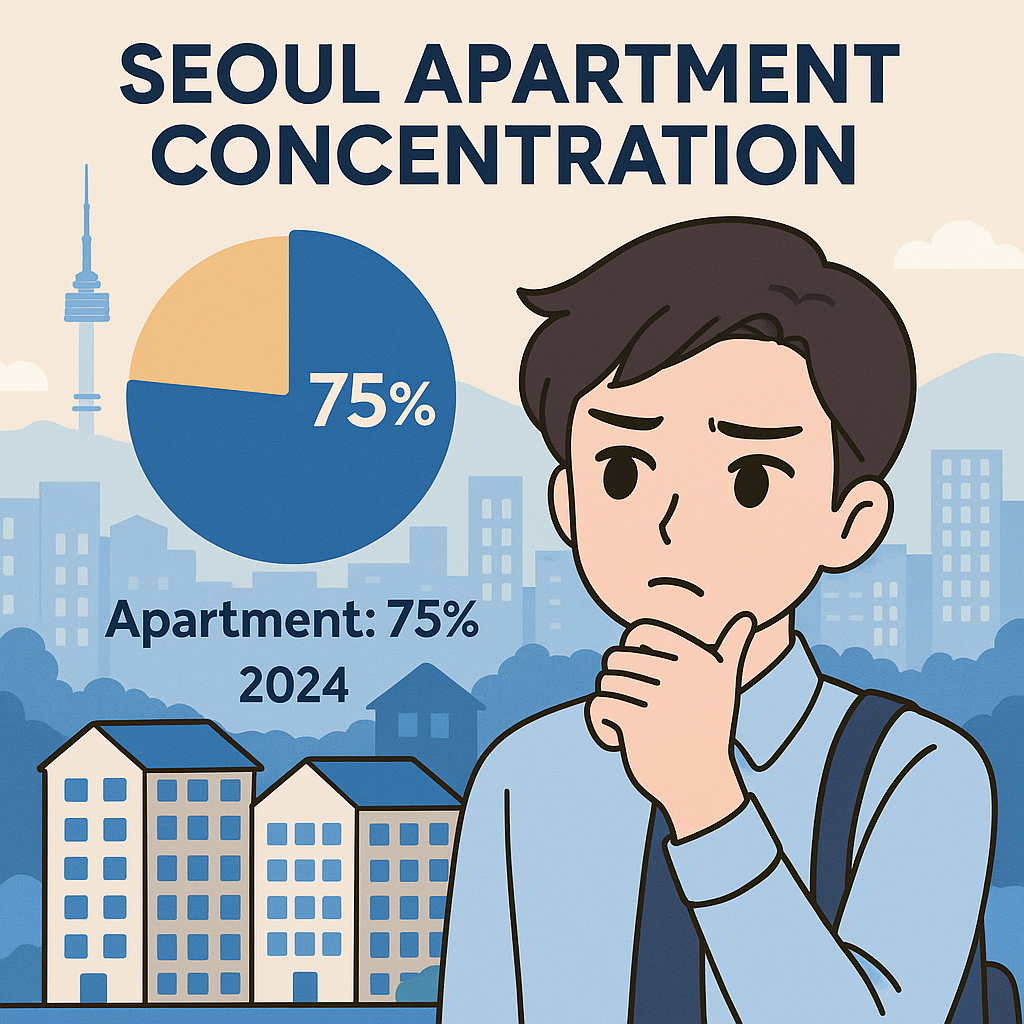
Seoul’s real estate market remains heavily focused on apartment transactions. According to the Ministry of Land, Infrastructure and Transport and the Korea Real Estate Board, as of 2024, over 80% of total housing sales in Seoul are apartments. This figure clearly outpaces transactions for villas (multi-family/row houses) and single-family homes.There are three main reasons for…
⚠️ This article is not intended for investment purposes. The global cryptocurrency market was thrown into turmoil this week after one of the largest futures liquidation events in recent memory. Bitcoin’s sudden plunge from around $121,000 USD to the $101,000 range wiped out more than $3 billion in leveraged positions across major exchanges. Within hours,…
Korea’s economic success story is often celebrated for its rapid industrialization and global competitiveness, but beneath the surface lies a persistent challenge: the mismatch between the labor market and the aspirations of its younger generation. Youth unemployment, unstable job prospects, and structural inequalities within the workplace are pressing concerns that define the experience of today’s…
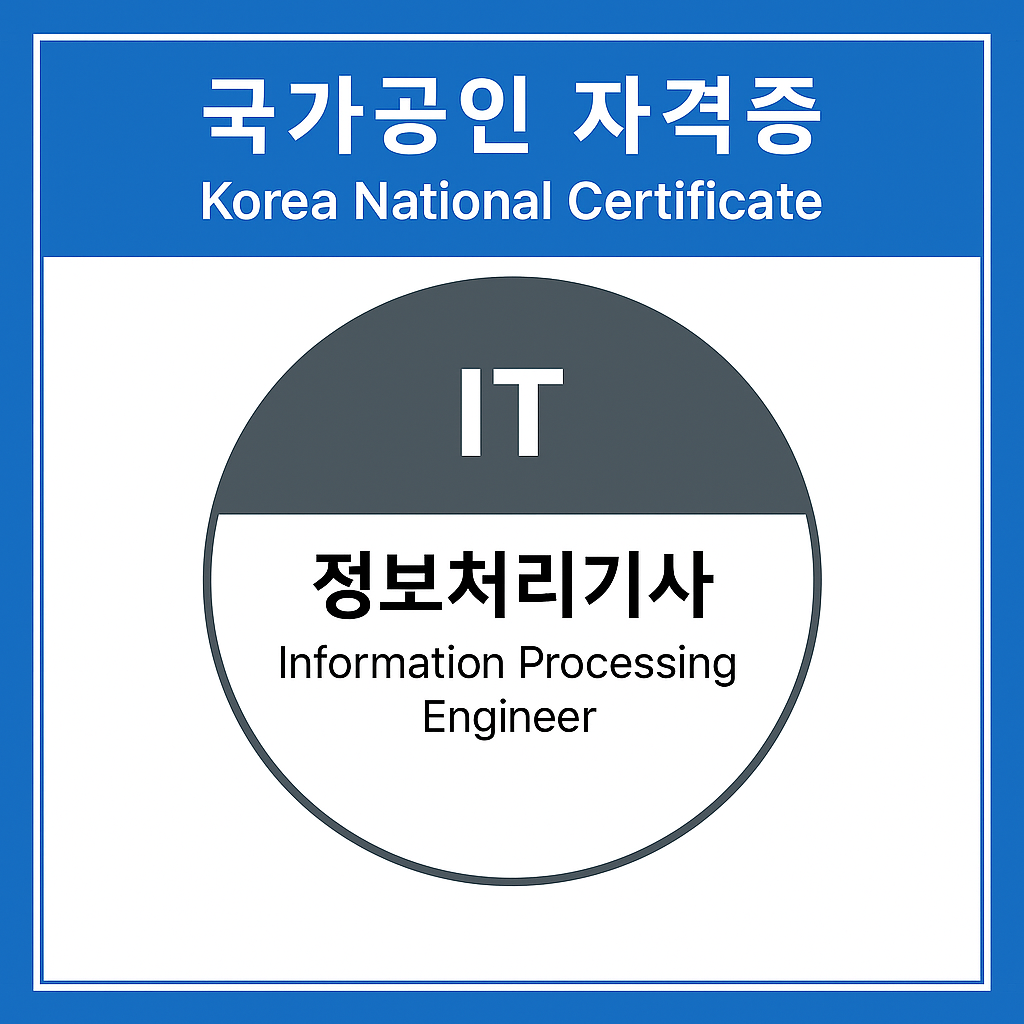
– The Most Widely Required Certificate in Korea’s Public & IT Sectors – Summary of Major IT Certificates in Korea (Narrative Format)Information Processing Engineer is administered by HRD Korea, held three times a year, costs 19,400 KRW, has a high level of difficulty, and is a national certificate often required in both public sector and…
To provide the best experiences, we use technologies like cookies to store and/or access device information. Consenting to these technologies will allow us to process data such as browsing behavior or unique IDs on this site. Not consenting or withdrawing consent, may adversely affect certain features and functions.
Functional
Always active
The technical storage or access is strictly necessary for the legitimate purpose of enabling the use of a specific service explicitly requested by the subscriber or user, or for the sole purpose of carrying out the transmission of a communication over an electronic communications network.
Preferences
The technical storage or access is necessary for the legitimate purpose of storing preferences that are not requested by the subscriber or user.
Statistics
The technical storage or access that is used exclusively for statistical purposes.The technical storage or access that is used exclusively for anonymous statistical purposes. Without a subpoena, voluntary compliance on the part of your Internet Service Provider, or additional records from a third party, information stored or retrieved for this purpose alone cannot usually be used to identify you.
Marketing
The technical storage or access is required to create user profiles to send advertising, or to track the user on a website or across several websites for similar marketing purposes.