“Widespread Hacking Incidents Rock South Korea”
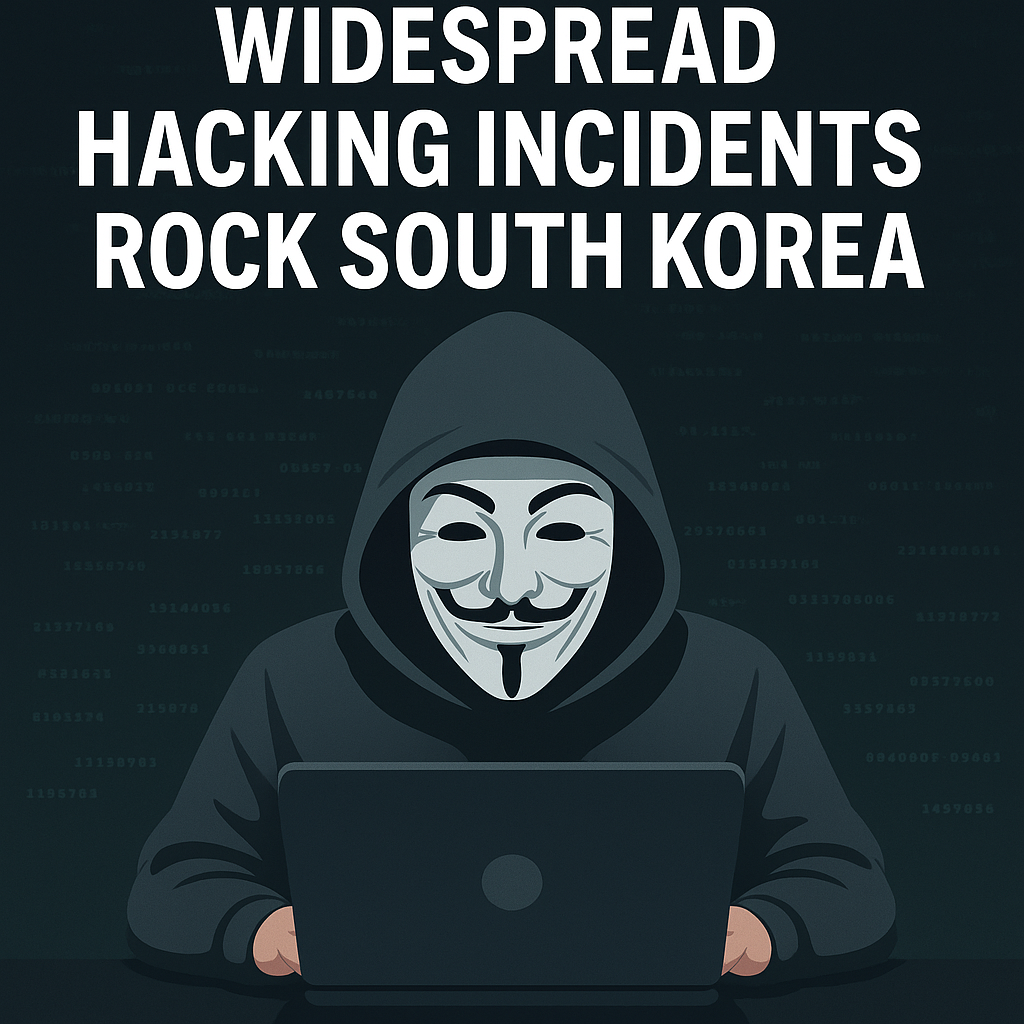
South Korea is facing one of its most turbulent cyber crises in recent memory. In recent weeks, several of the country’s major corporations — including SK Telecom, KT, Upbit, and Coupang — have fallen victim to massive hacking incidents that have shaken public trust in digital security.
The breaches have not only exposed vulnerabilities across industries but have also sparked growing concerns that the attacks may be linked to state-sponsored actors, possibly from abroad. According to multiple reports, government investigators suspect that some of these intrusions bear the same digital signatures as previous attacks attributed to North Korean hacker groups.
(Reuters, Nov. 28 2025 — “South Korea suspects North Korea behind hack of crypto exchange Upbit.”)
A Nationwide Pattern of Digital Exposure
The latest wave of cyber intrusions began with the crypto exchange Upbit, where hackers reportedly siphoned off digital assets worth about ₩44.5 billion KRW (≈ US $33 million). The attack targeted Upbit’s hot wallet infrastructure — a method previously seen in several state-level cyber operations. (Reuters, Nov 2025)
Soon after, SK Telecom and KT Corporation, Korea’s two dominant telecom operators, disclosed separate incidents involving customer data breaches and network outages. These cases highlight that the country’s core communication infrastructure is no longer immune to organized cyber threats. (Bloomberg, Dec 1 2025 — “Historic Korea Data Leak Caps Record Year for Cyber Breaches.”)
Coupang: The Heart of Korean E-Commerce Now Under Attack
Among the recent victims, the Coupang data leak has become the most symbolically significant. Coupang confirmed that approximately 33.7 million customer accounts were exposed, including delivery addresses, phone numbers, and partial payment data — marking one of the largest privacy breaches in Korean e-commerce history.
(TradingView / Invezz, Dec 1 2025 — “South Korea cyber crisis deepens as Coupang data leak exposes national vulnerabilities.”)
Coupang is widely recognized as the pioneer of Korea’s dawn-delivery revolution, transforming the country’s logistics landscape by enabling next-day or even same-day shipping. Even as other firms like Market Kurly and SSG.com have entered the early-morning delivery space, Coupang continues to dominate with an estimated 70 % market share in Korea’s online retail sector.
(Business Post Korea, Nov 2025)
Despite the massive breach, Korean consumers show little sign of abandoning the platform. Social media commentary reflects a mix of resignation and dependence — with many saying “Coupang is too convenient to quit.” Foreign media outlets have even remarked that “South Koreans cannot live without Coupang — even after being hacked.”
(Business Times Singapore, Dec 1 2025 — “South Koreans stick with Coupang after massive data breach.”)
The Psychology of Acceptance — Life in the Age of Permanent Exposure
What’s striking is not only the scale of the hacks but also Korea’s subdued public reaction. Despite headlines about data breaches affecting tens of millions, the issue has drawn limited political or institutional response. Analysts describe this phenomenon as “security fatigue” — a collective sense of exhaustion after years of repeated data leaks. Koreans have witnessed the exposure of their telecom records, medical data, and financial transactions multiple times; thus, many have normalized these risks as part of digital life.
As one cybersecurity expert noted:
“When even your mobile carrier and payment app have been hacked, switching services doesn’t guarantee safety — you simply choose the lesser evil.”
(Chosun Ilbo English Edition, Dec 2025 — “Coupang Data Breach Marks South Korea as a ‘Digital Battleground.’”)
Structural Weaknesses Behind the Attacks
Experts argue that Korea’s rapid digitalization — while fueling economic growth — has also produced a fragile cybersecurity foundation.
Corporate investments have focused on speed and customer convenience, often sidelining long-term security infrastructure.
The fragmented nature of Korea’s data protection laws adds another layer of risk, as overlapping jurisdictions and outdated standards leave enforcement inconsistent.
Government regulators have pledged tighter oversight, including potential mandatory encryption policies and public disclosure of security audits, but concrete measures remain under discussion.
(Bloomberg, Dec 2025)
Cultural Dependence and Digital Complacency
Why do South Koreans continue to rely on platforms even after major breaches? The answer lies in deep structural dependence — the intertwining of digital services with everyday life. From mobile payments to online groceries, citizens cannot easily disconnect from the digital systems that now power their routines. Moreover, Korea’s fast-moving culture often prioritizes efficiency and speed over caution, and consumers tend to value immediacy more than privacy. This socio-cultural backdrop creates a paradox: a hyper-connected nation increasingly vulnerable to the very systems that sustain its convenience.
Conclusion — Between Convenience and Security
Coupang’s data breach, together with the nationwide cyberattacks on SK, KT, and Upbit, underscores that South Korea’s digital economy is both advanced and exposed. The question now is not whether another breach will occur — but whether the nation can restore digital trust before public confidence erodes completely. South Koreans, for now, continue shopping, streaming, and communicating — choosing the platforms they trust “slightly more” rather than those they truly believe are safe. In a society where everything runs online, the boundary between security and surrender is becoming increasingly blurred.
[ Peter Kim, Korea-based journalist ]
What are your thoughts on this news?
![[Korea Chaos Story] “The Noise That Broke Me”… A Case of Misophonia in the Office](https://knewsdaily.com/wp-content/uploads/2025/07/크기변환4250722-broke.png)




 wpDiscuz