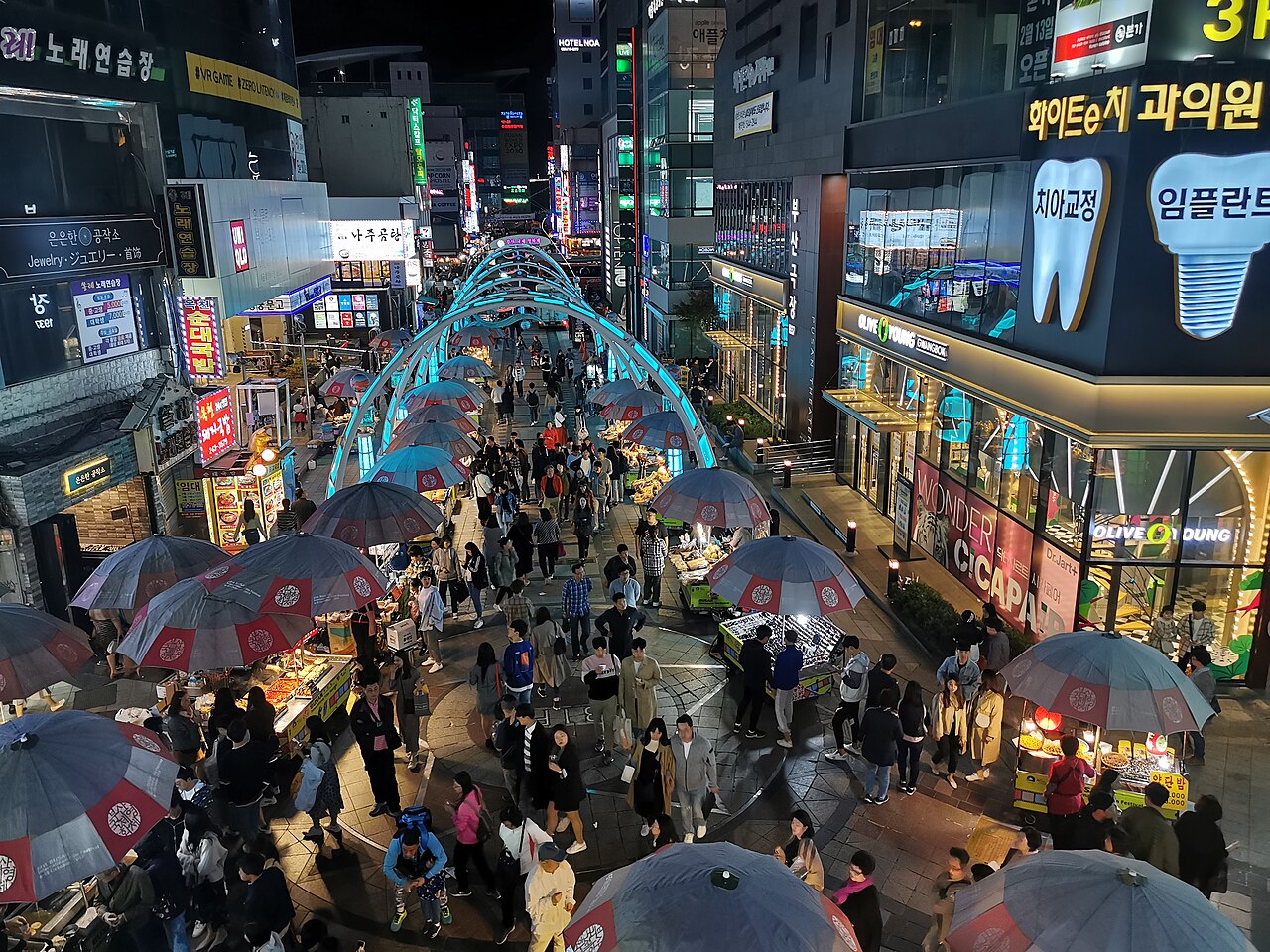
Gukje Market (Bupyeong Kkangtong Market)
Most visitors walk through Gukje's main lanes and leave having bought nothing of interest. The real market is the adjacent Bupyeong Kkangtong underground section, where Korean War-era black market culture evolved into a sprawling basement of vendors selling everything from vintage American military surplus to fresh makgeolli. The name 'kkangtong' means tin can — the original stalls were built from discarded US Army containers in the 1950s. Come hungry: the alley between rows 1 and 2 above ground has agalmegi-sal (pork shoulder) grills that open at 6am, popular with market workers finishing their overnight shifts. This is where Busan's raw port city identity survives most intact. Evening crowds are for shopping; early morning is for eating like a local.
"This place is waiting for its first photo.
If you've been here, share your view —
others would love to see it."