The Korean National Assembly recently passed several high-profile and controversial bills, including the so-called Yellow Envelope Act (amendments to the Labor Union Act) and revisions to the Grain Management Act, triggering intense reactions from the government, business sector, agricultural groups, and civic society. The Yellow Envelope Act expands collective bargaining rights to include subcontracted and special employment workers while tightening the conditions under which employers can file damage claims against labor unions. The revised Grain Management Act mandates government intervention through compulsory rice purchases when supply-demand conditions meet specific criteria, aiming to stabilize rice prices and protect farmers. In addition, a package of media-related legislation, including amendments to the Broadcasting Act, the Broadcasting Communications Commission Act, the Broadcasting Industry Promotion Act, and the Press Arbitration Act, were passed together, further intensifying partisan conflict.

The government criticized the bills as excessive regulation that undermines market principles and administrative neutrality. The Presidential Office indicated the possibility of exercising the presidential veto on selected bills. In particular, the business community strongly opposes the Yellow Envelope Act. Major organizations such as the Korea Chamber of Commerce and Industry and the Federation of Korean Industries argued that the law could weaken companies’ ability to respond to illegal strikes and lead to legal uncertainties in industrial relations. A human resources official at a large corporation commented, “This law would make it more difficult to hold unions accountable for obstructing business operations.” In contrast, labor groups defended the bill, calling it a long-overdue measure to prevent abuse of lawsuits against unions and to safeguard workers' fundamental rights.

The revised Grain Management Act also drew sharp divisions. The Korean Peasants League welcomed the bill, stating that mandatory government purchasing would help secure farmers’ livelihoods during oversupply periods. However, experts from institutions such as the Korea Rural Economic Institute warned that increased government intervention could promote structural inefficiencies in agriculture and delay necessary reforms. The same bill was passed by the Assembly last year but was vetoed by President Yoon Suk-yeol. There is now growing speculation that the same scenario could repeat.

Public opinion remains deeply split. While some citizens argue that these legislative moves are essential to protect marginalized groups such as farmers and workers, others criticize the ruling party for pushing ahead with controversial bills without broader national consensus. Given the precedent of past vetoes and the political significance of these laws, attention is now turning to whether the President will exercise his veto powers again and what ramifications this may have on future governance. As legal and political battles loom, the passage of these laws may mark only the beginning of a prolonged institutional standoff.
SK hynix has reportedly surpassed Samsung Electronics in certain high-value segments of the memory chip market, marking a symbolic shift in the global semiconductor industry. According to multiple industry reports…
– The Most Widely Required Certificate in Korea’s Public & IT Sectors – Summary of Major IT Certificates in Korea (Narrative Format)Information Processing Engineer is administered by HRD Korea, held…
1. The Glow Taking Over America: How K-Beauty Became a Movement If you’ve spent even a few minutes scrolling through TikTok lately, you’ve probably noticed something unusual taking over your…
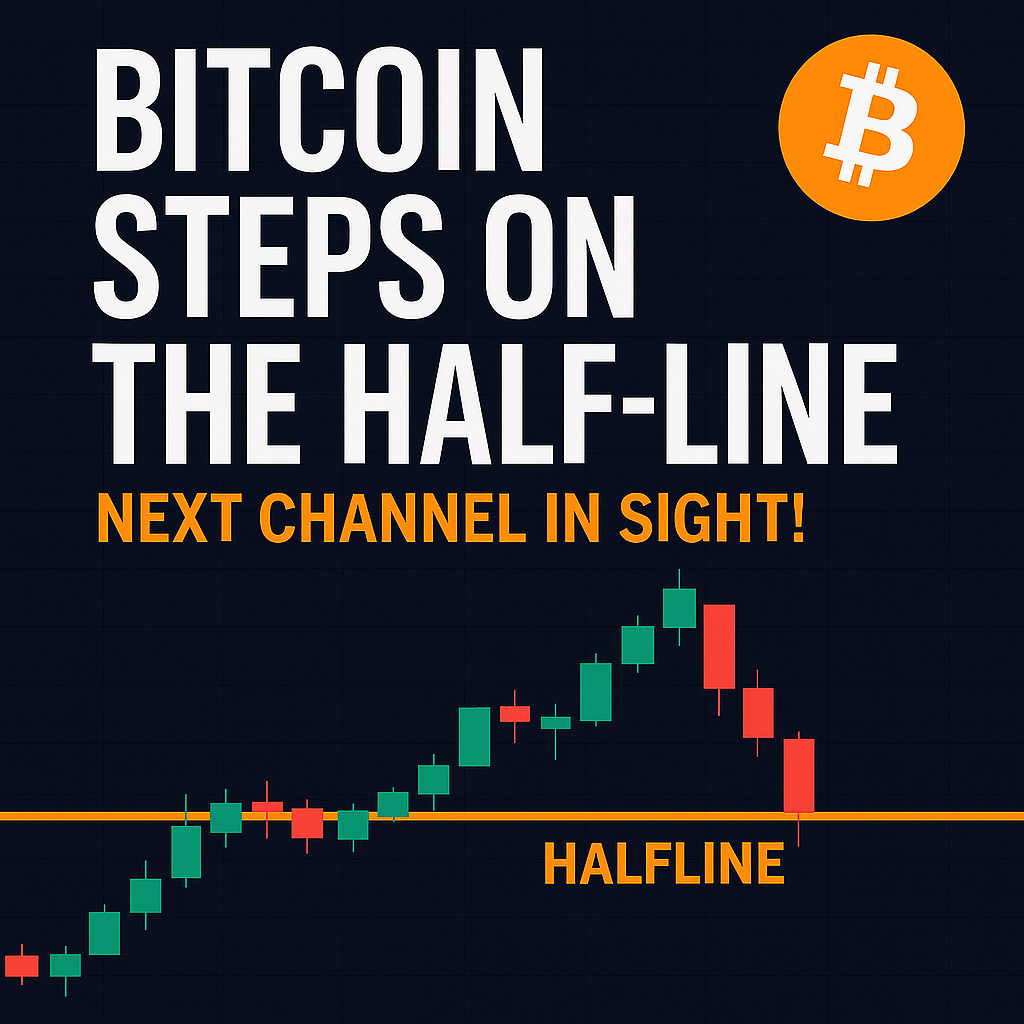
!!! Warning: This article does not constitute investment advice. Any trading losses are the responsibility of the investor. !!! Bitcoin Finally Holds the Half-Line Bitcoin has finally stepped above and…
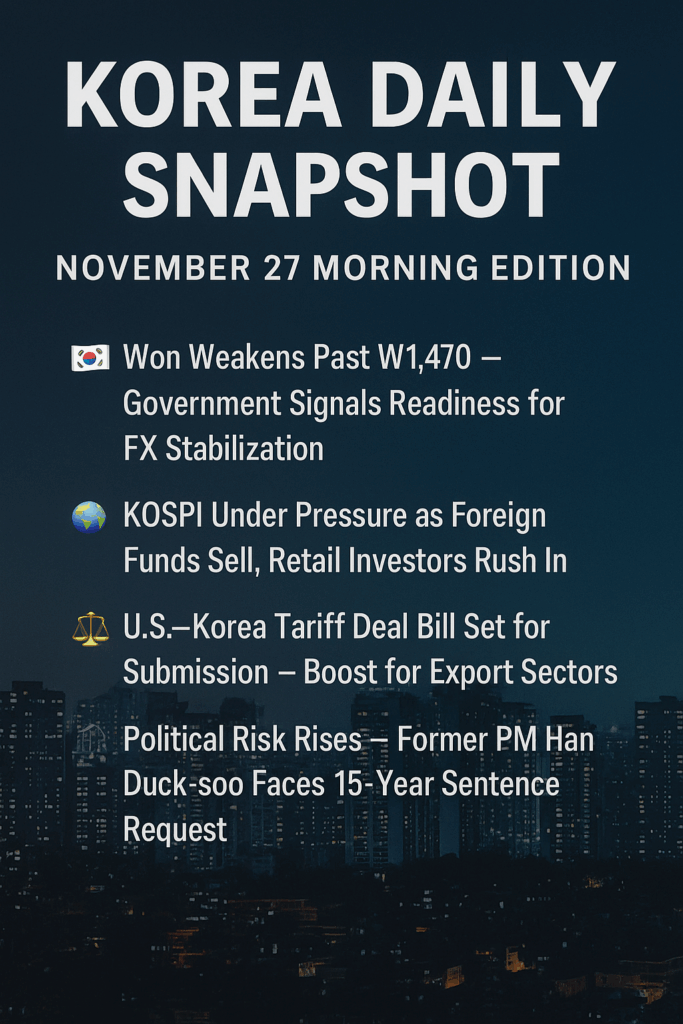
** Rising Market Volatility, Policy Uncertainty, and Currency Pressure Define the Day ** Image1. U.S. dollar / South Korean chart (Trading View) Won Weakens Past ₩1,470 — Government Signals Readiness…
1. Bank of Korea Keeps Base Rate at 2.50%, Balancing Debt Risks and U.S. Economic HeadwindsThe Bank of Korea (BOK) decided to keep its benchmark interest rate steady at 2.50%…
To provide the best experiences, we use technologies like cookies to store and/or access device information. Consenting to these technologies will allow us to process data such as browsing behavior or unique IDs on this site. Not consenting or withdrawing consent, may adversely affect certain features and functions.
Functional
Always active
The technical storage or access is strictly necessary for the legitimate purpose of enabling the use of a specific service explicitly requested by the subscriber or user, or for the sole purpose of carrying out the transmission of a communication over an electronic communications network.
Preferences
The technical storage or access is necessary for the legitimate purpose of storing preferences that are not requested by the subscriber or user.
Statistics
The technical storage or access that is used exclusively for statistical purposes.The technical storage or access that is used exclusively for anonymous statistical purposes. Without a subpoena, voluntary compliance on the part of your Internet Service Provider, or additional records from a third party, information stored or retrieved for this purpose alone cannot usually be used to identify you.
Marketing
The technical storage or access is required to create user profiles to send advertising, or to track the user on a website or across several websites for similar marketing purposes.