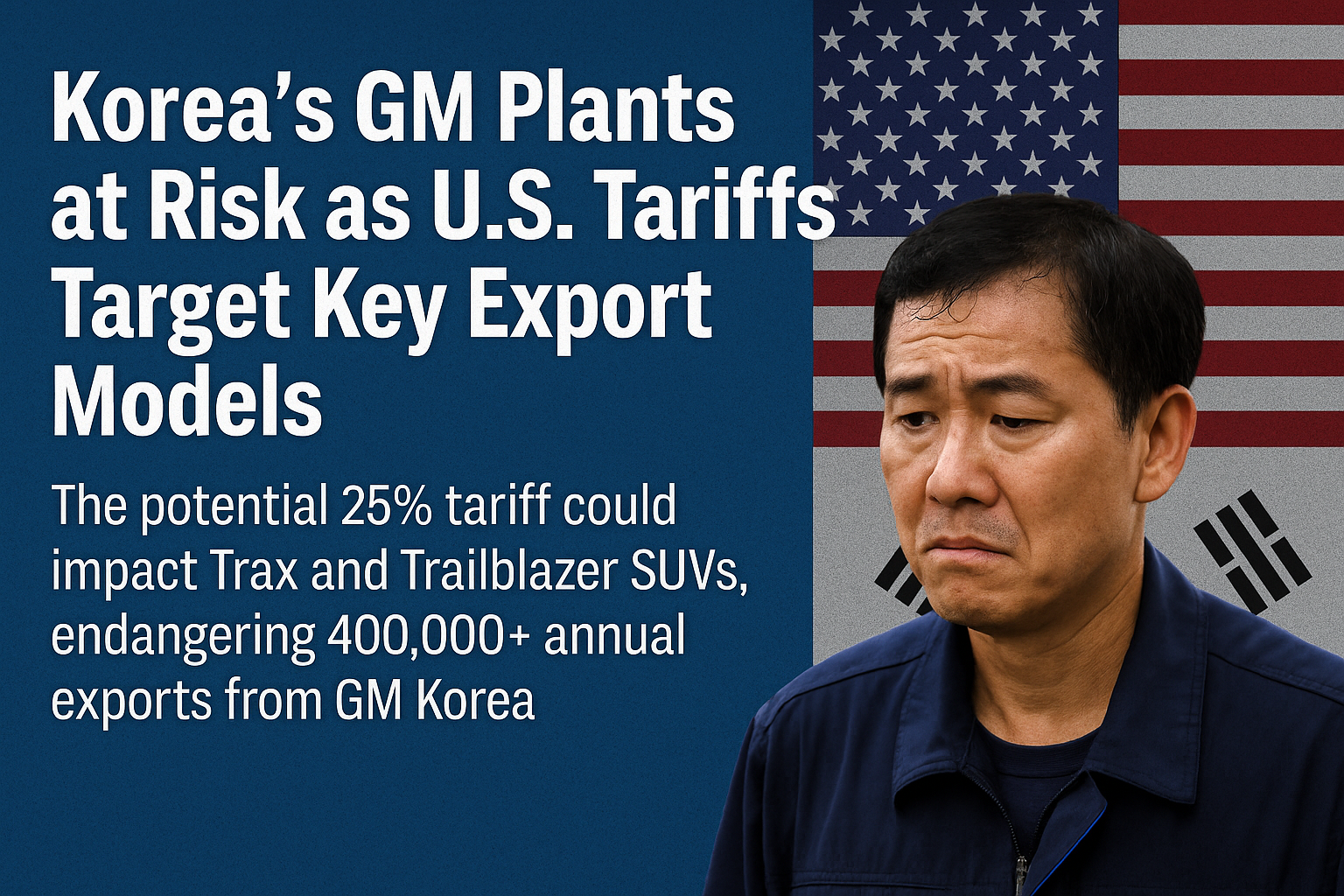
South Korea’s automotive exports face a fresh challenge as the United States considers imposing 25% tariffs under the Trade Expansion Act (Section 232) on select foreign-made vehicles. Among those targeted are GM Korea’s best-selling models, the Trax Crossover and the Trailblazer SUV, both manufactured at GM's Bupyeong and Changwon plants and exported to North America. If imposed, the tariffs could affect up to 400,000 vehicles annually, a blow that may threaten the viability of GM’s Korean operations and shake Korea’s broader automotive industry.

The potential tariff stems from ongoing reviews of national security and industrial self-reliance under the Biden administration, aiming to boost U.S. domestic manufacturing. According to the Financial Times, GM's Korean-made models are among the few in the company's global lineup that are fully reliant on exports to the U.S. without U.S.-based assembly, making them vulnerable in this protectionist pivot. While GM has not officially confirmed export disruption plans, it has acknowledged that “various scenarios are being reviewed.”

Industry analysts warn that should the 25% tariff be implemented, GM Korea's pricing competitiveness will collapse, effectively removing the Trax and Trailblazer from the U.S. compact SUV market. The two models together accounted for nearly 20% of GM's U.S. small crossover sales in 2024, making them vital to GM’s market share and revenue. Korean labor unions and local governments are also sounding the alarm, fearing plant closures or production cuts at facilities that employ over 12,000 workers directly and indirectly.

Diplomatically, the issue may evolve into a bilateral trade dispute, as the Korean government is expected to raise concerns through official trade channels. While the Korean Ministry of Trade has yet to issue a formal statement, sources suggest Seoul will push for a tariff exemption based on its FTA status and long-standing role in GM's global supply chain. However, with global election cycles and rising economic nationalism, such negotiations are unlikely to move quickly.

The U.S. has previously used Section 232 tariffs on steel and aluminum imports, citing national security. However, experts note that targeting vehicles produced by long-term allies like South Korea could backfire, both economically and diplomatically.
Editor’s View
This isn’t just a tariff story—it’s about how Korean manufacturing, globalized supply chains, and geopolitical priorities collide. GM Korea has long been a symbol of Korea’s industrial integration into U.S. markets. If protectionism cuts that off, the damage may extend beyond economics into strategic trust between Seoul and Washington. It also raises a serious question: Can Korea afford to anchor its auto exports so heavily on a single market?

What do you think? Should South Korea diversify its automotive export strategy to reduce U.S. dependency? Or should trade diplomacy take the lead?
While the market that is currently in the spotlight is rapidly changing, long-term investment is considered rather than short-term investment, and the scale is large. However, simply maintaining a grip…
Summary of Major CertificatesPCCE is a private entry-level certificate for beginners, composed of simple syntax and output-focused problems, making it ideal for those new to coding.PCCP is hosted by Programmers…
Bitcoin recently broke through the $120,000 mark, rewriting its all-time high and fueling strong buying momentum worldwide. According to CoinMarketCap and Upbit data, the global daily trading volume for Bitcoin…
Bitcoin has smashed through yet another record, climbing to over $116,000 — an impressive $4,000 surge in just 24 hours. According to major crypto exchanges on July 11th, the market…
Hey there, I’m Ethereum — the blockchain that turned an idea into a revolution. I was born in 2015, created by Vitalik Buterin, a young Canadian programmer who believed that…
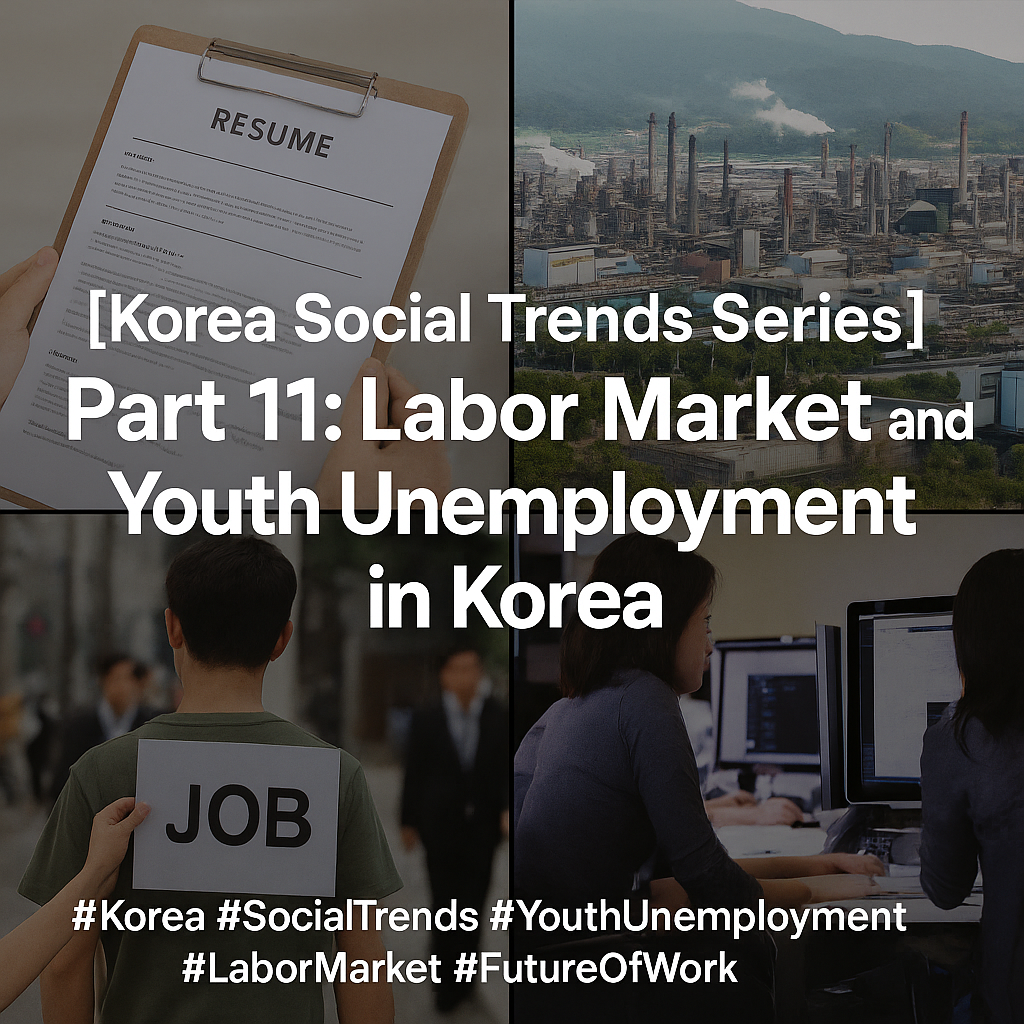
Korea’s economic success story is often celebrated for its rapid industrialization and global competitiveness, but beneath the surface lies a persistent challenge: the mismatch between the labor market and the…
To provide the best experiences, we use technologies like cookies to store and/or access device information. Consenting to these technologies will allow us to process data such as browsing behavior or unique IDs on this site. Not consenting or withdrawing consent, may adversely affect certain features and functions.
Functional
Always active
The technical storage or access is strictly necessary for the legitimate purpose of enabling the use of a specific service explicitly requested by the subscriber or user, or for the sole purpose of carrying out the transmission of a communication over an electronic communications network.
Preferences
The technical storage or access is necessary for the legitimate purpose of storing preferences that are not requested by the subscriber or user.
Statistics
The technical storage or access that is used exclusively for statistical purposes.The technical storage or access that is used exclusively for anonymous statistical purposes. Without a subpoena, voluntary compliance on the part of your Internet Service Provider, or additional records from a third party, information stored or retrieved for this purpose alone cannot usually be used to identify you.
Marketing
The technical storage or access is required to create user profiles to send advertising, or to track the user on a website or across several websites for similar marketing purposes.







😢😢😢😢😢😢