South Korea has been hit by one of the heaviest summer downpours in recent years, with the South Chungcheong Province recording over 400 mm of rainfall between July 16 and 17. The intense rain has already left one person dead and forced more than 100 residents to evacuate, as rivers overflowed and landslide threats escalated. Authorities raised landslide alerts to their highest level, triggering emergency rescues including the successful extraction of two individuals trapped under debris in Cheongyang County. Infrastructure across the region struggled to cope with the volume of water, with flooded roads and farmland damage reported throughout rural districts. Experts point to a concerning pattern of localized, high-intensity rainfall, which they say aligns with global trends in climate-drivenprecipitation concentration. Local officials, along with emergency teams, are now focusing on clearing debris, restoring access, and preparing for further downpours as the national weather agency issued continued warnings for the region. The disaster has reignited discussions over South Korea’s resilience against natural calamities, with increasing calls for investment in urban drainage systems, landslide prevention forests, and early warning digital infrastructure.
Editor’s Note
This week’s rainfall event in South Chungcheong should not be dismissed as an isolated natural occurrence. Rather, it signals a broader shift toward climate volatility, demanding that both national and local governments move beyond reactive crisis management. A strategic framework that integrates prevention, response, and recovery is no longer optional—it’s essential.
The Korean National Assembly recently passed several high-profile and controversial bills, including the so-called Yellow Envelope Act (amendments to the Labor Union Act) and revisions to the Grain Management Act,…
When traveling abroad or taking a domestic flight, one of the things we worry about the most is baggage regulations. In particular, it is often confusing whether hairspray, which is…
Chaos Story It started with something small.An Excel cell out of alignment. A missing image in a report.Minor things—nothing most people would even notice. But the team group chat always…
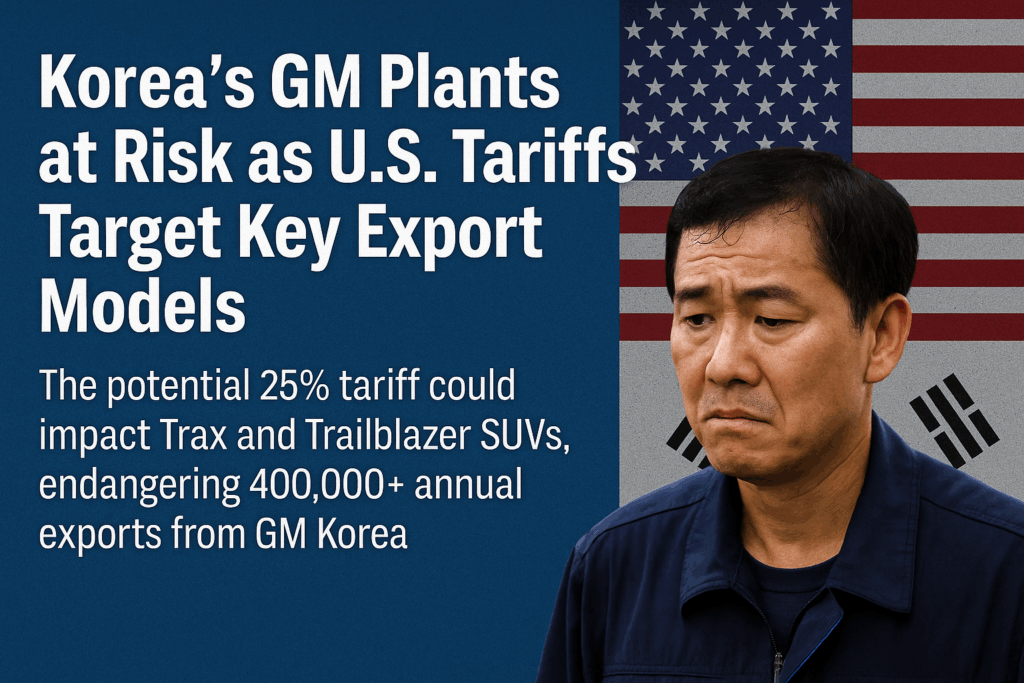
South Korea’s automotive exports face a fresh challenge as the United States considers imposing 25% tariffs under the Trade Expansion Act (Section 232) on select foreign-made vehicles. Among those targeted…
■ The Limits of Domestic Markets: Why “Staying Put” No Longer Works As domestic markets reach structural saturation, companies are increasingly turning their attention overseas in search of growth. According…
Korea, once considered one of the world’s most ethnically homogeneous nations, is undergoing a quiet but profound transformation. Driven by demographic challenges, economic needs, and globalization, immigration is reshaping the…
To provide the best experiences, we use technologies like cookies to store and/or access device information. Consenting to these technologies will allow us to process data such as browsing behavior or unique IDs on this site. Not consenting or withdrawing consent, may adversely affect certain features and functions.
Functional
Always active
The technical storage or access is strictly necessary for the legitimate purpose of enabling the use of a specific service explicitly requested by the subscriber or user, or for the sole purpose of carrying out the transmission of a communication over an electronic communications network.
Preferences
The technical storage or access is necessary for the legitimate purpose of storing preferences that are not requested by the subscriber or user.
Statistics
The technical storage or access that is used exclusively for statistical purposes.The technical storage or access that is used exclusively for anonymous statistical purposes. Without a subpoena, voluntary compliance on the part of your Internet Service Provider, or additional records from a third party, information stored or retrieved for this purpose alone cannot usually be used to identify you.
Marketing
The technical storage or access is required to create user profiles to send advertising, or to track the user on a website or across several websites for similar marketing purposes.




![[Korea Chaos Story] “I Just Wanted to Work in Peace”… When Group Chats Turn Emotional](https://knewsdaily.com/wp-content/uploads/2025/07/크기변환320250722-Chaos-KNet-1.png)