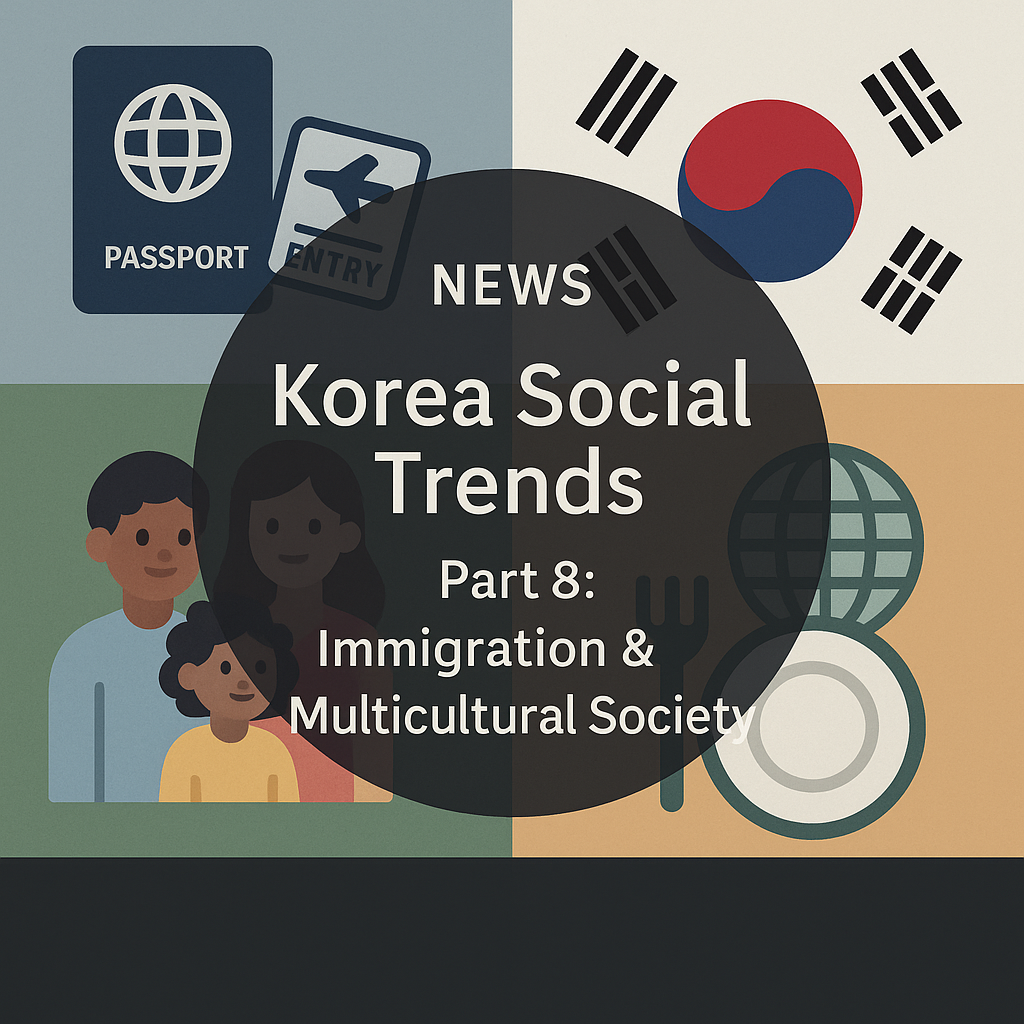
Korea, once considered one of the world’s most ethnically homogeneous nations, is undergoing a quiet but profound transformation. Driven by demographic challenges, economic needs, and globalization, immigration is reshaping the country’s social fabric. From migrant workers in factories and farms to multicultural families in schools, Korea is becoming increasingly diverse. For foreign readers, this shift is especially important because it not only reflects Korea’s response to urgent demographic realities but also raises questions about cultural identity, social cohesion, and the country’s future.
1. The Demographic Push for Immigration
Korea faces an unprecedented demographic crisis. With the world’s lowest birth rate—0.72 in 2024—and a rapidly aging population, the labor force is shrinking. Employers in industries like manufacturing, construction, agriculture, and elder care already report difficulties hiring younger Koreans. To fill the gap, Korea has expanded visa programs for foreign workers, especially from Southeast Asia, South Asia, and Central Asia. Today, over 2.5 million foreign residents live in Korea, accounting for nearly 5% of the population, a significant increase from less than 1% two decades ago. While still small compared to countries like the U.S. or Germany, this growth represents a major cultural shift for a nation long accustomed to ethnic homogeneity.
2. Migrant Workers and Economic Contributions
Foreign workers are essential to Korea’s economy. Many come under the Employment Permit System (EPS), which allows small and medium-sized enterprises to hire workers from countries such as Vietnam, the Philippines, Nepal, and Uzbekistan. These workers often take on difficult, low-paying jobs that locals avoid, particularly in rural areas and “3D” industries (dirty, dangerous, and difficult). For example, strawberry farms in Gyeonggi Province depend heavily on migrant labor during harvest season. Without these workers, entire sectors would face collapse.
However, these contributions come with challenges. Reports of poor working conditions, wage disputes, and lack of integration support highlight the difficulties faced by migrants. Civil society groups advocate for better protections and cultural programs to help foreign workers adapt, but systemic issues remain.
3. The Rise of Multicultural Families
One of the most visible signs of Korea’s changing demographics is the growth of multicultural families. International marriages, especially between Korean men in rural areas and women from Southeast Asia or China, have increased since the 1990s. Today, children from multicultural families represent about 5% of all elementary and middle school students in Korea, and in some rural districts, the proportion is much higher.
These children often face challenges of identity and belonging. Language barriers, discrimination, and lack of tailored educational support can create difficulties. Yet many also serve as bridges between cultures, fluent in Korean and their mother’s native language. Government and NGOs have launched programs to support multicultural families, from Korean language classes to after-school tutoring. The long-term question is how well these children will be integrated into mainstream society and how their presence will reshape Korea’s cultural norms.
4. Social Perceptions and Challenges
Despite progress, Korea still grapples with acceptance of diversity. Surveys show that while younger Koreans are more open to multiculturalism, older generations often hold more conservative views. Negative stereotypes about migrant workers and mixed-heritage children persist, sometimes fueled by media coverage of crime or social problems. At the same time, foreign spouses—often women—report difficulties gaining social acceptance and full rights.
For example, a Vietnamese woman married to a Korean farmer may face pressure to assimilate quickly, learn Korean, and take care of elderly in-laws while lacking strong community support. These stories highlight the cultural friction between Korea’s traditional family expectations and the realities of multicultural households.
5. Global Comparisons
Korea’s multicultural journey can be compared with Japan and European nations. Like Japan, Korea has historically emphasized ethnic homogeneity and has been slow to embrace immigration. However, Korea’s demographic crisis has forced faster policy shifts. In contrast, European countries have long histories of immigration but continue to struggle with integration, social inequality, and political debates over multiculturalism. The U.S. and Canada, known for diversity, offer models of how immigrant communities can shape national culture, though not without tension. For Korea, these comparisons suggest that its future depends on how effectively it manages integration while preserving social cohesion.
6. Everyday Examples of Change
The evidence of multiculturalism is increasingly visible in daily life. In Seoul, restaurants serving Vietnamese pho, Indian curry, or Uzbek dumplings are now common, often run by immigrants themselves. Multicultural festivals celebrating Thai New Year or Filipino Independence Day attract both foreigners and locals. In rural areas, it is not unusual to hear children switching between Korean and their mother’s native language on playgrounds. Even in pop culture, more diverse faces are appearing in advertisements and television shows, signaling a slow but steady normalization of diversity.
7. Policy and Future Directions
The Korean government faces a delicate balancing act. On one hand, it must attract foreign workers to sustain economic growth and support an aging population. On the other, it must build policies that encourage integration and social acceptance. Recent initiatives include expanding support centers for multicultural families, improving visa systems, and considering pathways to permanent residency or citizenship for long-term residents.
The challenge lies in ensuring that multiculturalism does not become a source of division. If foreign workers are seen only as temporary laborers without rights or respect, social tensions may rise. Conversely, if Korea embraces diversity as part of its national identity, it could harness immigration as a source of vitality and innovation.
8. Looking Ahead
The rise of immigration and multicultural families marks one of the most profound social changes in Korea’s modern history. It challenges long-standing notions of national identity, family, and community. For foreign readers, Korea’s experience reflects a universal dilemma: how to integrate newcomers while maintaining social harmony. The answer will shape Korea’s future economy, culture, and global image.
Editor’s Note
Korea’s emerging multicultural society highlights the intersection of demographic necessity and cultural transformation. Immigration brings both opportunities and challenges: economic contributions from migrant workers, cultural richness from diverse families, but also tensions around identity and acceptance. How Korea navigates this transition will determine whether it can build a more inclusive society that reflects both tradition and change. For outsiders, Korea offers a case study in how quickly a historically homogeneous nation can become a multicultural one when confronted with demographic realities.
Korea, once known for its strong emphasis on family and marriage rooted in Confucian traditions, is undergoing a profound transformation in how people view love, partnership, and family life. The…
A growing number of young Koreans in their 20s and 30s are choosing to leave their jobs earlier than ever before. According to recent data from the Ministry of Employment…
Binance’s native cryptocurrency BNB (Binance Coin) has surged to a new all-time high, exceeding $720 USD for the first time in its history. The rally comes amid renewed investor confidence…
!!! Warning: This article does not constitute investment advice. Any trading losses are the responsibility of the investor. !!! A Failed Recovery After the Breakdown Bitcoin’s recent price action paints…
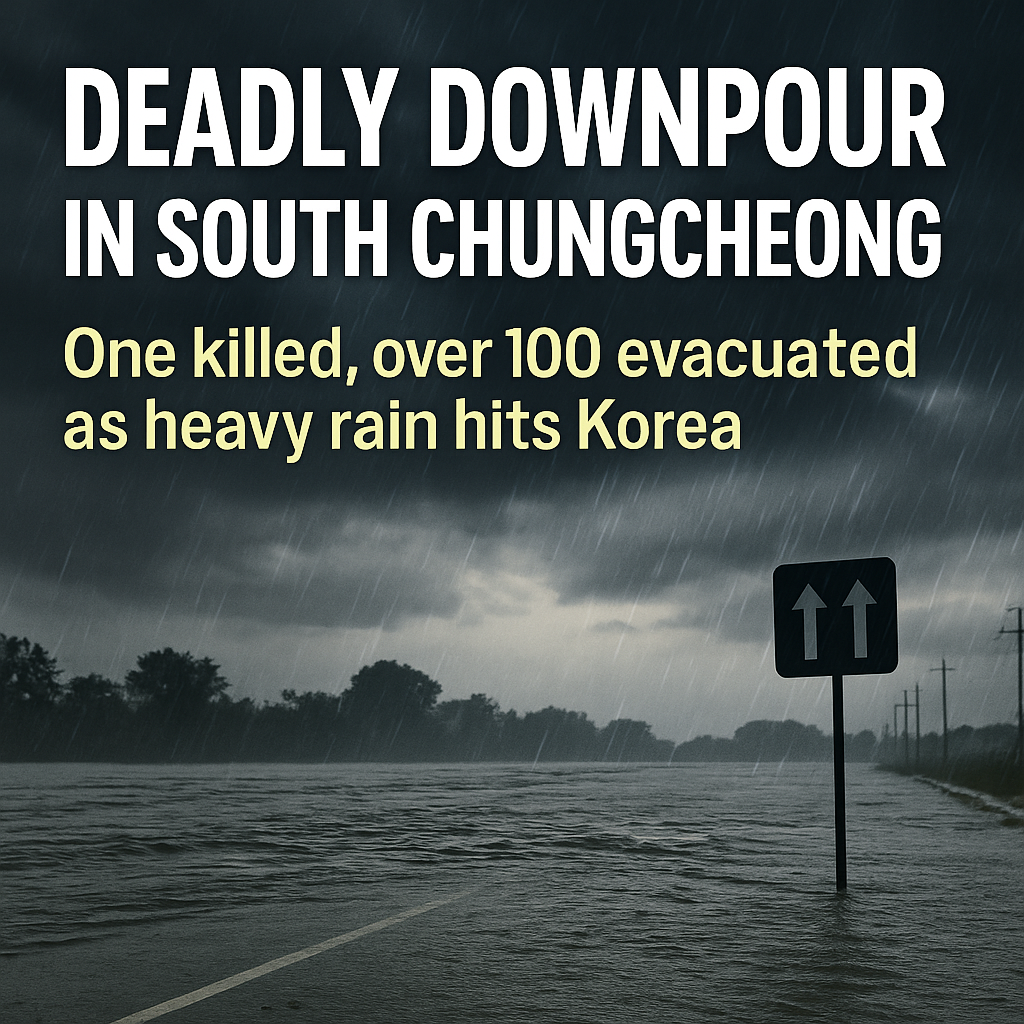
South Korea has been hit by one of the heaviest summer downpours in recent years, with the South Chungcheong Province recording over 400 mm of rainfall between July 16 and…
knewsdaily is a Korea-focused information platform designed to help promote a wide range of content and businesses, including hotels, services, products, digital content, and websites. The platform provides a simple…
To provide the best experiences, we use technologies like cookies to store and/or access device information. Consenting to these technologies will allow us to process data such as browsing behavior or unique IDs on this site. Not consenting or withdrawing consent, may adversely affect certain features and functions.
Functional
Always active
The technical storage or access is strictly necessary for the legitimate purpose of enabling the use of a specific service explicitly requested by the subscriber or user, or for the sole purpose of carrying out the transmission of a communication over an electronic communications network.
Preferences
The technical storage or access is necessary for the legitimate purpose of storing preferences that are not requested by the subscriber or user.
Statistics
The technical storage or access that is used exclusively for statistical purposes.The technical storage or access that is used exclusively for anonymous statistical purposes. Without a subpoena, voluntary compliance on the part of your Internet Service Provider, or additional records from a third party, information stored or retrieved for this purpose alone cannot usually be used to identify you.
Marketing
The technical storage or access is required to create user profiles to send advertising, or to track the user on a website or across several websites for similar marketing purposes.