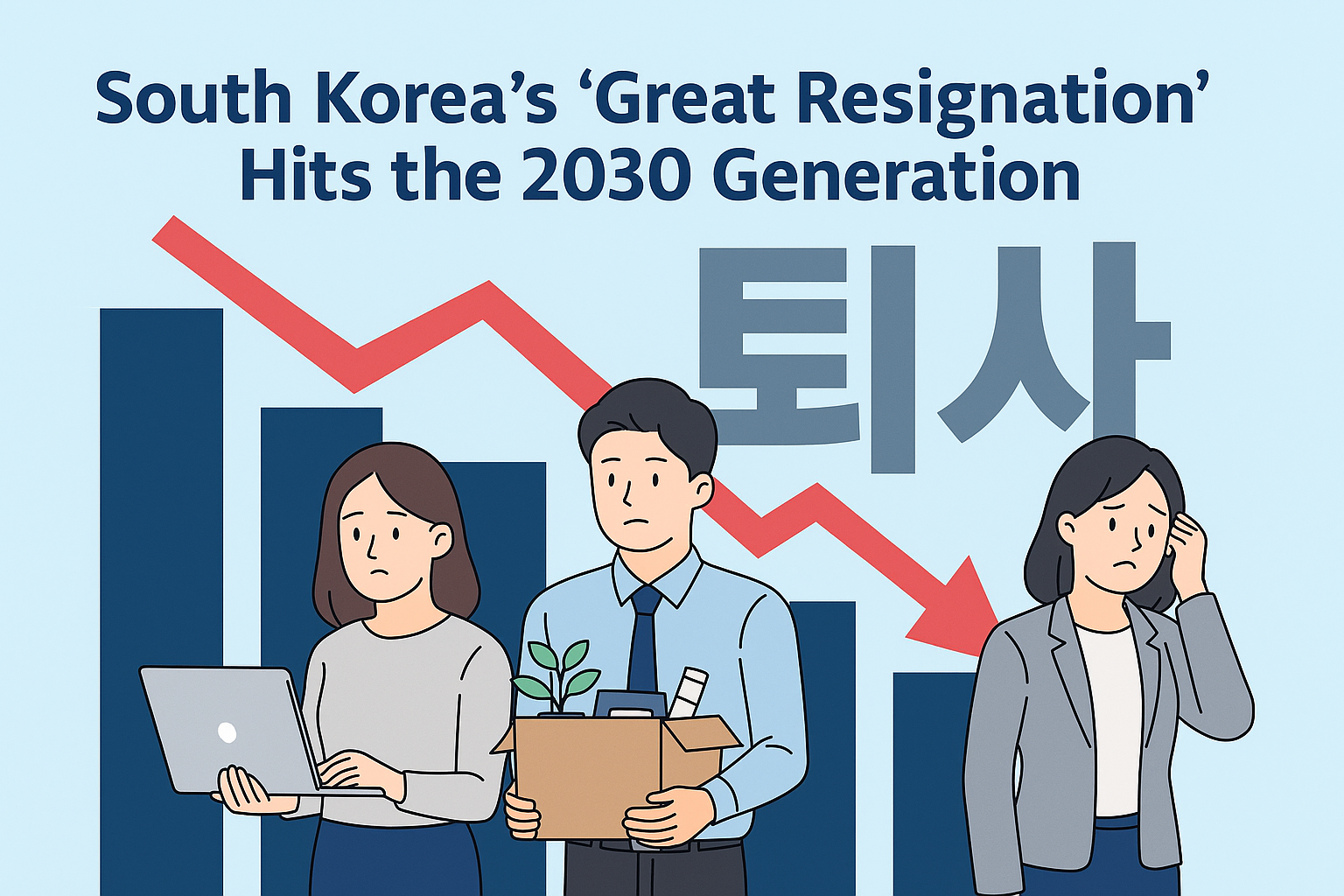
A growing number of young Koreans in their 20s and 30s are choosing to leave their jobs earlier than ever before. According to recent data from the Ministry of Employment and Labor, the resignation rate among workers in their 20s and 30s rose by 8.7% compared to the same period last year.

While landing a job in Korea remains competitive, many young employees feel trapped by stagnant wages, intense overtime culture, and a lack of clear career progression. In response, some companies are trying to adapt by introducing flexible work hours and remote work options to retain young talent.
Why It Matters
Many experts say this “quitting trend” reflects deeper structural problems in Korea’s job market. Wages have not kept up with rising living costs, making it difficult for young workers to save money or feel financially secure. This reality is pushing more people to seek side jobs, freelance work, or even prepare for startups rather than staying at one company for life.
Personal Perspective
“Currently, youth employment in Korea is a serious problem. The value of money is decreasing while living expenses keep rising, yet average salaries have not improved significantly. This is not just about individuals or companies — it’s a deep-rooted cultural issue in Korea’s economic system.

Blind money often flows quietly into the hands of a few, and healthy capital circulation is blocked. Small businesses and SMEs cannot easily raise salaries if they are just maintaining the average.

This isn’t only a generational issue — it reflects problems passed down from the 40s and 50s generation. Many do not have enough personal assets, including real estate, to feel financially stable. It will take systemic changes, not just individual effort, to solve this problem.”
At first, I thought it was just a weird doll. Scary teeth, lumpy fur, and overly large, empty eyes.But once you look at it, you are strangely drawn to it….
Over the past two years, marriages and romantic relationships between Korean men and Japanese women have risen sharply, sparking widespread curiosity in both countries. Statistics from Korea’s Ministry of Justice…
⚠️ This article is intended for informational purposes only. For actual legal issues, please consult a licensed attorney. The number of foreign workers in Korea has steadily increased each year….
Korea is often described as a society that changes faster than almost any other in the world. From technology adoption to cultural fads, the country tends to move in waves…
South Korea is experiencing a surge in small business closures as household spending continues to shrink under the burden of high inflation and elevated interest rates. According to the National…
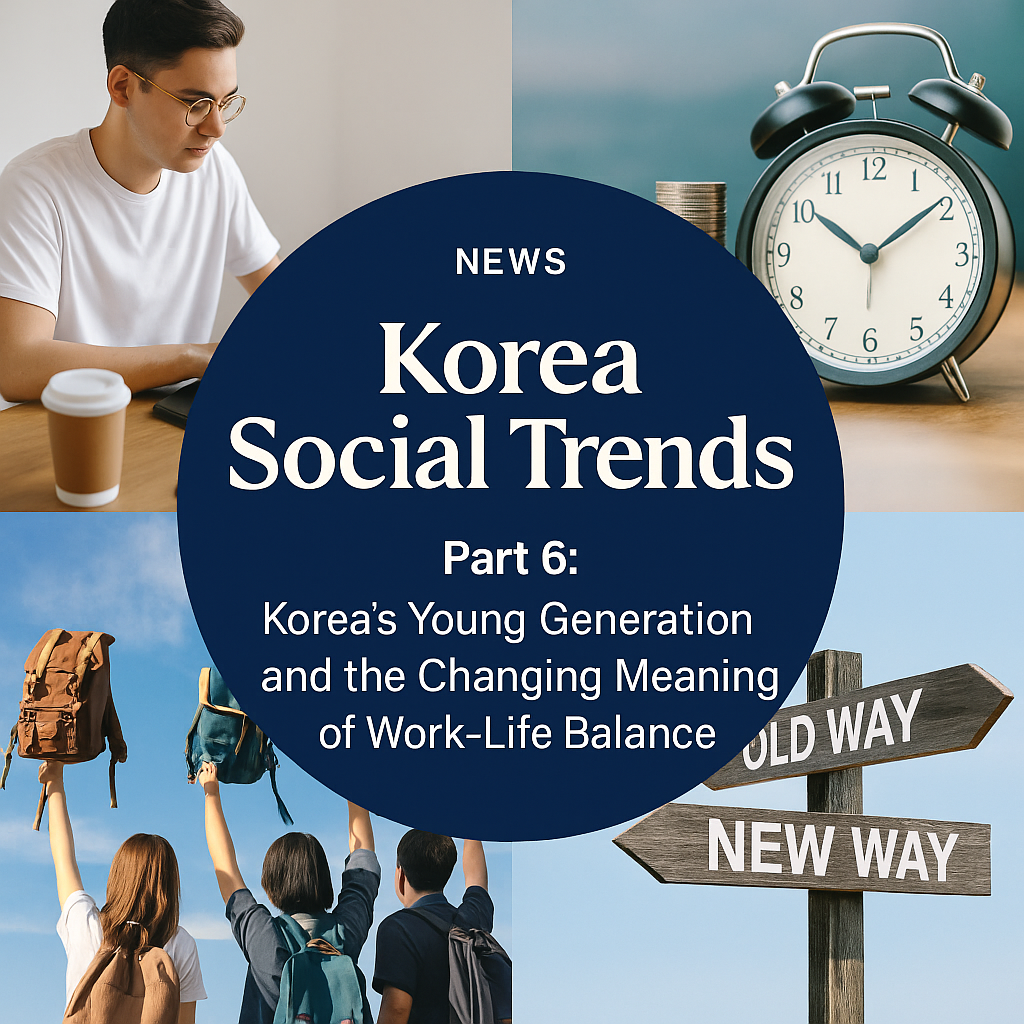
In Korea, few topics spark as much conversation as the changing attitudes of young people toward work and life. For decades, Korea was known for its relentless work culture, often…
To provide the best experiences, we use technologies like cookies to store and/or access device information. Consenting to these technologies will allow us to process data such as browsing behavior or unique IDs on this site. Not consenting or withdrawing consent, may adversely affect certain features and functions.
Functional
Always active
The technical storage or access is strictly necessary for the legitimate purpose of enabling the use of a specific service explicitly requested by the subscriber or user, or for the sole purpose of carrying out the transmission of a communication over an electronic communications network.
Preferences
The technical storage or access is necessary for the legitimate purpose of storing preferences that are not requested by the subscriber or user.
Statistics
The technical storage or access that is used exclusively for statistical purposes.The technical storage or access that is used exclusively for anonymous statistical purposes. Without a subpoena, voluntary compliance on the part of your Internet Service Provider, or additional records from a third party, information stored or retrieved for this purpose alone cannot usually be used to identify you.
Marketing
The technical storage or access is required to create user profiles to send advertising, or to track the user on a website or across several websites for similar marketing purposes.